Blog

Unlock true customer 360
Seamlessly unify and activate customer data from your cloud data warehouse and beyond.

.webp)


Power 1:1 personalization
Deliver hyper-personalized customer experiences to forge deeper connections and transform casual customers into loyal advocates.

.webp)
.webp)

.webp)
.webp)


.webp)


.png)


Boost your bottom line
Discover the industry's latest tips, tricks, and trends to elevate your customer marketing strategies.




.webp)


.png)

.webp)
.webp)
.png)


.png)


From “What if we had that field…” to “Let’s launch a campaign tomorrow.”
If you’ve ever found yourself staring at your segment builder, knowing there must be a better way to target the right customers for your dream campaign but are unsure how to get there… this one’s for you.
At Simon AI™, we talk to marketers every day who know what they want to do, but they just can’t access the data that would make it possible in time to capture the moment. Need to identify sci-fi superfans for an upcoming collection drop? Too bad your catalog doesn’t tag fandoms. Want to launch a campaign for last-minute gifters or sneakerheads or “cozy fall vibes” shoppers (hello PSL season!)? You’re stuck waiting on your data team to build the fields: a process that can take weeks (or often more).
We’re changing that.
With the launch of the Simon AI™ Data Agent, marketers can now go from messy, unstructured data to usable, intelligence-rich Simon AI Fields and AI Moments in a matter of hours - not weeks. AI Fields and AI Moments power advanced segmentation, contextual personalization, and campaign performance without relying on the data team every step of the way.
This is the beginning of a new way to work. One where every marketer has domain experts by their side. Agentic domain experts are AI partners that understand the data, spot the patterns, and help launch campaigns faster than ever to ensure you never miss another prime marketing moment again.
Welcome to Agentic Marketing
Data Agents are part of Simon AI’s broader Composable Agent family - a new model for marketing execution built around goals, not guesswork. Instead of requiring rigid rules and SQL logic upfront, agents reason across customer behavior, product data, and real-world signals to create usable, actionable outputs like:
- AI Fields: structured intelligence from messy data (e.g. “Gift Intent Score” or “Affinity to Sci-Fi Themes”)
- AI Moments: triggers from the real world (like weather shifts, social trends, or product searches)
- Blueprints: reusable, always-on playbooks that automate the setup and execution of your goals
Together, composable Simon AI™ Agents act like your own data and execution team, working within your data cloud, under your governance, with no black boxes or handoffs required.
Data Agents is your key to unlocking domain-specific experts: focused on transforming raw datasets, like product catalogs, reviews, behavioral logs, or even chat transcripts, into marketing-ready intelligence.

What makes Simon AI Data Agents different
Where traditional systems surface what’s already tagged, Data Agents look for what’s been missed when preparing data for marketing.
No predefined rules required
You don’t need to tag every product by hand or define categories upfront. Data Agents uses LLMs and Snowflake Cortex to infer meaning from fields like titles, descriptions, images, and even unstructured sources like product specs or instruction manuals.
Fields you didn’t know to ask for
Want to target “boho holiday shoppers” or “customers who are about to travel”? Data Agents builds fields like Style_Aesthetic and Travel_Readiness_Score based on real data patterns - even when those fields don’t exist in your schema.
No more waiting on data teams
Most marketing teams rely on ticketing queues and requests to their BI teams to get a new field created for use in segmentation and personalization. With Data Agents, what used to be a month waiting for your ticket to get picked up turns into hours or a single day; marketers can launch high-impact campaigns while the moment still matters.
Explainable and governed
Every AI Field comes with metadata and a reason for being. You can inspect lineage, logic, and examples - all while keeping your data securely in place inside your cloud data warehouse.
What’s new for marketers
The launch of Data Agents introduces powerful new capabilities:
- AI Field Creation: Use natural language prompts to request new fields like “sci-fi theme” or “likely gift for dad,” and let the agent do the enrichment work.
- AI Field Discovery: Explore signals you didn’t know you had: inferred intent, passion clustering, co-purchase patterns, and more.
- Autonomous Use or Blueprint-Ready: Use Data Agents standalone for segmentation and personalization, or seamlessly plug into campaign Blueprints to activate instantly

In Action: Sci-Fi personas, no manual tags required
Let’s say you’re an eCommerce marketer planning a new sci-fi themed drop to coincide with the launch of the new Project Hail Mary movie trailer. You hop into Simon AI™ and type:
“I want to launch a new campaign featuring our sci-fi related products, but I don’t know which of our products can be linked to sci-fi.”
Data Agents scan your cloud data warehouse and respond with:
“I can help with that! We can infer sci-fi product themes from your product catalog by analyzing product names, descriptions, and images. Want me to create an AI Field for you so you can personalize your campaign with sci-fi related products?”
You click “Approve.”
Within hours, you have a new field called SciFi_Product_Theme, populated and ready to use for personalization. Better yet, you didn’t need to define the rules or wait for data engineering to prioritize your ticket.
That’s the power of agentic field creation, and it’s only just the start.
More use cases, more possibilities
The first data domains we’re launching with are Product Catalog Enrichment and Weather Moments, and already we’ve seen powerful examples like:
- Pop Culture Mapping: Tag unlicensed products with the most likely 3rd-party brand or franchise association
- Product Clustering: Group products based on upsell or cross-sell opportunity
- Cold Weather Readiness Score: Automatically scores customers based on their likely responsiveness to upcoming cold snaps
- Next Week Heat Index by Zip: Surfaces high-temperature forecasts at the ZIP-code level, enabling precise geo-targeting for warm-weather promotions
We’re constantly expanding to other data domains like weather, social trends, geography-based analysis, and session behavior - each with their own specialized data domain experts. Simon AI™ Social Moments adds social and cultural signals to this mix, detecting rising trends and preparing activation-ready audiences while demand is still emerging.
Why it matters now
Marketers are drowning in data but are starving for insight. They’re sitting on a goldmine of untapped signals - in catalog data, customer behavior, unstructured reviews, and support logs - but lack the tools to activate at speed.
Data Agents turns that around.
It delivers on the promise of AI in a way that’s usable, visible, and marketer-field. You don’t need to know SQL. You don’t need to guess what to ask for. You just need to know your goal.
Simon AI™ Agents - starting with Data Agents - take care of the rest.
Ready to unlock your hidden signals?
Request a personalized demo of Data Agents today. Let us show you how Simon AI™ Fields turn your raw data into campaigns that convert.

I founded Simon ten years ago to help brands better engage with their customers.
Here’s my little secret: I’m actually a terrible customer.
I have no airline loyalty. Sure, I collect points, but I’ll always choose the fastest or cheapest option. Except for shoes, baseball caps, and Simon AI gear, I don’t wear logos. And I clean my inbox like a hawk. I skip most emails, unsubscribe fast, and report spam if I don’t recognize the sender.
Customers like me are hard to reach
At our AI Summit earlier this year, I spoke with a customer whose repurchase rate was below 25%. His team followed the standard playbook: post-purchase sequences, cross-sells, seasonal offers, and loyalty programs. What happens? High drop-off. Whenever they push harder to hit quarterly numbers, unsubscribes spike.
As he was talking, I realized two things.
First, most customers behave like me. They’re distracted, inconsistent, and quick to disengage.
Second, Simon AI is built for precisely this problem.
The reality for modern marketers
Maybe I’m not so terrible after all. I do spend money. I do engage. Just on my terms.
This summer, I bought six tickets on SeatGeek to see the Commanders in DC. A week later, I needed a parking pass. Then my wife reminded me our six-year-old had outgrown his Commanders shirt.
When the weather turned hot, I ordered three swimsuits from Marine Layer. Before heading to Europe with the kids, I picked up a pair of Nike AF1s. Comfortable enough for long walks, but sharp enough for dinner.
The truth is, I’m just hard to reach. Between two kids, two dogs, and running an AI company, it takes a lot for a brand to get my attention.
That’s the reality facing every marketer. And until now, the kind of contextual personalization needed to move someone at their moment of interest has been out of reach.
Marketers are forced into painful trade-offs. As you launch more campaigns, performance drops. As you personalize, volume drops.
Over and over, I hear these challenges from marketing leaders at brands.
- Data access. Despite the proliferation of modern cloud data, marketers today still cannot access the data they need or receive it in time to move a customer to act.
- Execution bottlenecks. Campaigns take too long to launch, leaving teams dependent on blunt, generic tactics. There’s no effect of acting on a customer moment six to eight weeks after it happens.
- The context gap. First-party data only tells part of the story. The sharpest arrow in the quiver is context: signals from weather, inventory, social trends, events, and thousands of other signals that affect what a customer needs, how they decide, and what you can offer them. This isn’t even customer data, it’s that plus business data and real-world signals.
- AI acceleration. The pace of change is only increasing. Most teams are still experimenting with surface-level AI apps for copy or analytics. They need help applying AI to solve complex problems.
These aren’t edge cases. They’re the reasons marketers can’t break through today to what they aspire to be, what they know will work. Just listen to Charles at Redbuddle. He gets it.
Think of it this way. Knowing I prefer solid-colored t-shirts is an insights question. But answering it takes coordination with data teams. Knowing I restock when summer hits requires context about weather, season, and past shopping behavior. Usually, that’s where marketing imagination hits the reality of data complexity and dependencies.
This is where Simon AI comes in.
The Simon AI™ Agentic Marketing Platform
Today, I’m excited to introduce the new Simon AI.
The Simon AI brings together an AI-first composable CDP, composable Simon AI Agents, and the marketer-friendly Simon AI Personalization Studio. It creates a new workflow where marketers set goals, agents turn live customer and contextual data into attributes and triggers, and automated campaign execution that scales and adapts with continuously fresh data.
Simon AI combines these three core components into one unified system:

Simon AI Composable CDP
The AI-first CDP runs natively in your cloud data warehouse.
- Access to 100x more customer and contextual data than traditional CDPs.
- Zero ETL with the Snowflake AI Data Cloud — live data flows directly from the data cloud into campaigns.
- Identity resolution, audience matching, and predictive insights built in.
Simon AI Agents
Composable AI Agents act as your data and execution team.
- Signal detection. Spot churn risk, sudden demand spikes, social trends, weather, inventory shifts, and so much more.
- Data prep. Messy signals become ready for campaigns with Data Agents that do the heavy lifting, removing typical dependencies on data teams.
- Enrichment. Write new fields and segments back into the data cloud for enterprise use.
- Orchestration. Automate workflows across Braze, Attentive, Iterable, and more.
As an example, Simon AI™ Social Moments builds on this foundation to bring social and cultural signals directly into your activation workflows.
Agents take on the heavy lifting so your team can focus on strategy, creative, and customers.
Simon AI Personalization Studio
A marketer-friendly workspace that starts with goals, not static segments.
- Blueprints. Translate goals like “increase repeat purchases” into adaptive strategies.
- AI Fields and AI Moments. Agents find the signals and patterns for you, then convert live data into marketing-ready attributes and triggers.
- Adaptive execution. Based on guidance from your Blueprints, campaigns evolve automatically as signals change.
The Personalization Studio feels simple as you prompt your agents to guide you through setting up your campaign. But underneath, the agents and the CDP are doing very hard work so that you can focus on your goal and the performance of your campaign.
Together, these capabilities create a new model for how marketing gets done: Agentic Marketing. The result is higher converting campaigns, faster launches, better customer experiences, and measurable revenue growth. With Simon AI, even small marketing teams perform like large ones while staying focused on strategy and creativity.
Your data, your cloud, your rules
We know some teams are excited about AI but cautious about where their data goes. Simon AI runs directly in the Snowflake AI Data Cloud, and there are deployment options to many other cloud data warehouses. The architecture ensures data is always governed by the same standards your enterprise already uses.
That’s what makes personalization scalable, measurable, and secure.
Why now: our transformation to AI-first
AI is changing marketing forever. The tools of the past can’t keep up with the pace of change, the volume of data, or the expectations of consumers. To compete, marketers need to act on 100x more signals, make 100x the decisions, and execute micro-campaigns at scale.
Going forward, brand differentiation and campaign performance will rely on personalization at scale, and the only way to get there is with AI.
That’s why we’ve transformed Simon into an AI-first company. Our platform is now Simon AI. And our new home is Simon.ai.
This isn’t a rebrand for the sake of a new look. It reflects the work we’ve done over the past 18 months to solve the most complex problems marketers face.
Join us on this journey
If you’re struggling with any of these issues, we’d love to talk:
- Customers disengaging after the first purchase
- Campaigns that take weeks instead of hours to launch
- You design campaigns based on assumptions, not new insights
- Know AI can help, but not sure where to start
Visit Simon.ai to explore the platform. Let us know you want to talk about how we can help solve your challenges. Or connect with our team directly at Shoptalk this week to see how Agentic Marketing can work for you.
The future of marketing belongs to brands that adapt in the moment. That’s what Simon AI is built for.
Simon AI will change how our customers engage with consumers and how their campaigns perform.
I’m excited for what comes next. See you soon.

It seems like only yesterday that AI burst on the scene in a flurry of buzzwords. Suddenly, every predictive model and machine learning algorithm was being rebranded as “AI.”
And that was just the beginning. As AI took center stage, expectations surged. Marketers found themselves sorting through a wave of new terms, tools, and claims, without a clear sense of what AI could actually solve beyond writing copy. Could it help with the complex data and workflow challenges at the heart of their biggest execution problems?
The latest development, however, presents an opportunity to change that. “Agentic AI” is the latest step in the rapid evolution of practical AI. It creates a framework by which various AI solutions can work together to do complex work and achieve results, not just copy or recommendations.
To help marketers capitalize on this inflection point, we’ll demystify Agentic AI, explaining not just what it is, but also how it can unlock new possibilities in CRM and one-to-one marketing.
A quick primer on AI in marketing
To understand Agentic AI, it’s helpful to view it as part of a multi-phase evolution…one that began several years ago.
Phase 1: Predictive AI (machine learning → deep learning)
The foundation of modern customer analytics, this is where AI first gained real traction about a decade ago. It evolved from manually built algorithms using structured data into Deep Learning systems that could draw from much larger datasets, both structured and unstructured, delivering more accurate predictions without the need for step-by-step programming.
Focus: Forecasting future customer behaviors based on historic data
Under the Hood: Regression models, decision trees, clustering, neural networks
Common Use Cases:
- Product Recommendations
- Customer Churn Prediction
- Lookalike modeling
- Next-best-offer targeting
- Propensity scoring
- Forecasting customer lifetime value (LTV)
While powerful, Predictive AI often required data science resources to build, implement, and optimize. Marketers could leverage the results, but couldn’t improve or expand them without help.
Phase 2: Expressive AI (natural language processing + generative AI)
This is what unlocked AI for the masses. In just the past three years tools like ChatGPT, Gemini, and Claude let non-technical users tap complex algorithms with simple chat-like prompts. The result was the ability to generate copy, images, and plans with a fraction of the time and resources previously required.
Focus: Receiving natural language inputs and generating content (text or images) in response
Under the Hood: Large Language Models (LLMs), Natural Language Processing (NLP), text-to-image, audio & video generation
Common Use Cases:
- Personalized subject lines and copy
- Conversational assistants (chatbots)
- Creative ideation for campaigns
- Dynamic (1:1) content generation for websites or emails
- SEO content and product descriptions
This phase democratized AI and opened the sandbox to folks without a data science degree. But it still only accelerated tasks and required human prompts to drive every output.
Phase 3: Agentic AI (autonomous agents using predictive + expressive AI)
The newest development in AI’s evolution promises to supercharge what has come before. Agentic AI combines predictive logic with expressive capabilities and adds autonomous decision-making.
Focus: Performing multi-step processes to reach user-defined goals
Under the Hood: AI “agents” with memory, planning, and self-correction capabilities, along with goal-based orientation
Common Use Cases:
- Autonomous segment building
- Self-optimizing lifecycle campaigns
- AI-driven media buying
- Self-directed A/B testing
- Personalized cross-channel journey orchestration
This is a natural progression: from insight to creation to orchestration. And marks a major turning point in speed, scale, and customization.
With that as the background, let’s take a deeper look at Agentic AI, and how marketers can make it work for them.
The AI Agents: Meet your virtual team
At its core, Agentic AI introduces a new actor into the marketing tech stack: the AI Agent.
An AI agent is a software system that uses artificial intelligence to perform tasks and achieve goals with a degree of autonomy. It’s more than a simple chatbot: it can plan, adjust, and even interact with other tools and systems. Goal orientation is the critical distinction from the narrow, task-based completion of earlier phases. For example, Generative AI can write the marketing copy, but Agentic AI can define and run the entire campaign.
Think of these agents as your virtual team, each focusing on a different skillset to achieve your overall objective. And like all good teams, you don't need to tell them what to do every step of the way.
With that metaphor firmly in mind, let’s take a look at the types of agents that are emerging as key members of the AI-powered team.
Critical to the Agentic AI concept, these agents can even collaborate with each other, passing data, syncing learnings, and adjusting strategies. For example, Automation Agents can tap Insights Agents to understand creative performance and work with Content Agents to automatically adjust future content based on results.
See how Data Agents work inside Simon AI
Why it matters: From bottlenecks to scaled customization
If you’ve ever waited three weeks for a data request or had creative bandwidth stall a campaign idea, you’ll understand the potential of Agentic AI. It removes bandwidth and timelines as gating factors—letting programs and tests go to market faster.
Insights and Data agents mean you no longer need to wait in prioritization queues to understand segmentation opportunities or establish a new targeting dataset. Content agents enable scaled creative development cycles without the additional cost of an expanded creative team or a massive freelancer budget. And Automation agents working with Optimization agents allow you to deploy, test and iterate dozens of campaigns each week, without overloading your team.
As a result, marketers shift from “task executors” to “strategy drivers”. AI handles the time-consuming operations, freeing teams to develop bold ideas and richer customer experiences.
And just as importantly, it unlocks a true 1:1 customer experience, enabling micro-segments and journey moments that have always been on the wishlist, but were too resource-intensive to scale. Now Agentic AI can handle that scale, allowing you to drive customer connections in ways that blast campaigns never could.
What to look for in an AI platform
Since the AI space is evolving by the day, best practices are still being written. One thing is certain, though: the foundation is data. Customer data, campaign data, website data, customer care logs, social trends, weather forecasts, regional events…all fuel the agents that craft targeted campaigns and timely touchpoints, turning engagement moments into opportunities to delight.
That makes choosing the right AI Platform to house, process, and act on that data critical to realizing the full potential of this new frontier. In many ways, this is the natural next step in the evolution of the Customer Data Platform.
With that in mind, here is a checklist to guide your selection:
Your CDP sits at the heart of Agentic AI activation. Agents can only perform as well as the data they operate on. The CDP provides the foundational dataset and it’s increasingly where agents live and operate. The right CDP becomes not just a warehouse, but a launchpad for intelligent action.
Simon AI™ Social Moments is an example of this evolution, using first-party data and real-time signals like social trends to help agents turn context into action.
What marketers should do next
If the first step is to understand the possibilities (and hopefully we’ve helped with that), then the next step is to explore those possibilities:
1. Speak with your CDP or MarTech lead
Explore what agentic capabilities already exist in your stack. If none are available internally, then speak with CDPs and platforms that already have capabilities in market and explore a potential fit.
2. Start with one Use Case
Pick a goal or program that’s been on the roadmap for a while, but has been hampered by lack of resources or limited scale: a microsegment, a reactivation journey, a location-based recommendation series. These will serve as real-world use cases to see what your Agentic AI can do.
3. Focus on Human-in-the-Loop Workflows
Begin with semi-autonomous agents where you review and approve recommendations. Build personal trust and enterprise confidence in AI capabilities and the potential upside.
4. Be Ready to Course Correct
As with any new collaboration, there will be growing pains. That is part of the process. By adjusting and trying again, you’ll improve the Agents’ performance, as well as your own proficiency in leveraging them.
5. Shift Your Mindset
Think of Agentic AI not as a tool, but as a collaborator. The goal is to give it the right guidance and feedback to let it run and ultimately scale your impact across multiple programs.
The future is now
Agentic AI is here. For marketers and CRM leaders, that’s both daunting and exciting. With clarity about what agents do and how they can help you, you’ll find an opportunity to solve real problems: faster segmentation, smarter campaigns, true 1:1 personalization at scale. It’s about shifting from repetitive execution to bold, strategic direction and a more expansive customer experience.
Is the technology evolving quickly? Absolutely. The technology shift has led to very rapid innovation in how marketing products are being designed today. Broad usage and intense focus is improving performance at a breakneck pace. And as these agents become more capable, the marketers who thrive will be those who lean in early, experiment often, and deploy these new “teammates” with clarity and creativity, unlocking myriad customer moments that feel both personal and limitless.Now is the time to start taking action to learn and choose use cases where Agentic AI can help you. In six months, the landscape will be different, and the brands that make moves now will be ahead of the curve.

Personalization at scale has always been more of a promise than a reality. For years, marketers have been told that CDPs and automation tools would let them finally deliver the right message, to the right person, at the right time. But in practice, the workflow remains stubbornly slow.
Campaigns still depend on engineering support, SQL queries, and fragile ETL pipelines. Signals arrive late, audiences go stale, and campaigns launch after the moment has passed. Even with heavy investments in analytics tools and marketing clouds, most marketing teams still can’t see what data is missing or act quickly when customer behavior or the real-world around the customer shifts.
Personalization ends up generic, late, and never truly at scale.
A shift in how marketing gets done
You don’t have to work this way anymore. Instead of waiting on queries, tickets, or pipelines, imagine a system that runs inside your data cloud. It’s always on, reasoning over live data, spotting patterns, adjusting targeting, and optimizing campaigns in real time.
That’s what Composable AI Agents deliver. They’re modular, goal-driven AI agents that run in your data cloud, working like a virtual data and ops team to surface insights, transform data, automate execution, and optimize revenue:
 Insights Agents surface hidden signals and patterns, such as churn risk in a support chat or a seasonal spike in browsing.
|
.png) Data Agents transform those signals into marketer-ready attributes that you can use immediately in campaigns.
Data Agents transform those signals into marketer-ready attributes that you can use immediately in campaigns.
|
 Automation Agents construct campaigns across activation, orchestration, and messaging, automatically triggering and optimizing hundreds of micro-campaigns.
|
 Optimization Agents forecast business impact, score audiences, and recommend adjustments to maximize conversion and revenue.
|
On their own, each agent is powerful. Together, they change the operating model for marketing and for data teams. Agents handle the heavy lifting on data so you can launch faster, adapt in the moment, scale personalization without production lift, and still run with full governance intact.
See how Data Agents work inside Simon AI
What Composable AI Agents let you do
The real power of Composable AI Agents is in what they let you achieve. Here are seven ways they transform the work of marketing.
1. Cut the backlog. Work without past dependencies.
SQL queries, ETL jobs, and endless tickets for data teams and engineering slow down most marketing teams. Every new idea ends up in a backlog, and by the time it goes live, the opportunity has passed.
Composable AI Agents remove those dependencies. They give marketers direct access to governed data and workflows inside the data cloud. You can move fast on your own, while data teams keep focus on governance and model quality instead of campaign requests. The result is faster execution for marketers and fewer fire drills for data teams.
2. Start with your goal. Escape the trap of assumptions.
Most systems make you start with a predefined audience, even when it doesn’t match your real objectives. That forces marketers to work on assumptions, building static segments and twisting them into something that only approximates the outcome you want.
Composable AI Agents flip the model. You define the goal, like increasing repeat purchases, boosting subscription retention, or improving first-order conversion. Rather than building around a fixed segment, agents uncover new signals, patterns, and audiences, then align the right data, logic, and activation automatically. Because they’re not limited by segment design, they can scale this process across hundreds of audiences and journeys, far beyond what most teams could support manually.
Instead of chasing assumptions, you work toward outcomes. Every campaign optimizes directly to the metrics that matter.
3. Scale personalization, without the production lift.
Traditional personalization has always come with trade-offs. You can manage a handful of big campaigns, but delivering hundreds of smaller, tailored ones usually requires more resources, more time, and more production lift than most teams can support.
Composable AI Agents remove that barrier. They dynamically create and optimize micro-campaigns across every channel, adapting to customer context — behavior, timing, sentiment, even external triggers — in real time.
- Run more campaigns with less effort. Even a small team can manage hundreds of journeys that stay relevant without adding headcount or manual work.
- Stay relevant automatically. Campaigns adjust instantly as signals change, so customers see the right message in the right moment, not yesterday’s best guess.
- Turn personalization into growth. Faster launches, higher throughput, and adaptive targeting compound into stronger conversions and measurable revenue.
With agents, personalization shifts from a production burden to a growth engine, giving every customer an experience that feels designed for them.
4. Launch 10x faster and hit the customer moment.
Traditional workflows force you into slow motion. Insights get handed off, audiences are exported, and activation depends on external systems. By the time the campaign runs, the customer moment has already passed.
Composable AI Agents collapse those steps. They surface insights, build audiences, and trigger activation directly inside your data cloud. Faster time to market ensures messages hit at important moments, directly impacting conversion by making sure your campaigns arrive when the customer is ready to act.
Early adopters of Simon AI have reported building contextually relevant campaigns ten times faster than their previous processes, turning weeks and months into a rapid cadence at greater scale.
5. Stay relevant with live customer and contextual signals.
Most campaigns run on yesterday’s data. Segments go stale, and the context has already shifted. That’s why so many messages feel out of step with what customers actually need.
Since they operate on live data in the cloud, Composable AI Agents respond to what’s happening now. They detect changes in behavior, shifts in sentiment, or external events like weather and inventory. That could mean spotting churn risk in a support chat, noticing a competitor mention, or tying browsing behavior to local weather. Your campaigns adapt in the moment to keep every message relevant, timely, and aligned with customer needs as they evolve.
6. Move fast, with enterprise-grade confidence.
Speed means nothing if it compromises trust. Composable AI Agents, powered by Snowflake Cortex AI, execute entirely inside Snowflake. There’s no data movement, no black boxes, and no compliance risk.
Every agent inherits Snowflake’s enterprise controls: role-based access, column-level security, and audit trails. Governance and visibility stay intact while marketers move fast. You get autonomy to innovate, and the business gets the confidence that every campaign is secure and compliant. It’s the best of both worlds—agility for the marketing team, assurance for the enterprise.
What campaigns look like in practice
Composable AI Agents make the biggest difference in campaigns where timing and context matter most. For example:
- Win back customers before they churn. Traditional workflows flag risk too late. Agents surface churn signals in real time, score audiences, and launch winback flows while customers are still deciding.
- Trigger contextual promotions. Calendars miss the moment. Agents combine live context — like weather, social trends, or inventory — with behavior data to deliver promotions exactly when demand spikes.
- Create engagement with new content. Audiences won’t always search for what’s next. Agents spot patterns in what subscribers are consuming and recommend fresh content the moment it’s released, driving discovery and repeat visits.
Each of these examples shares the same pattern: act on live signals, launch fast, and adapt as the context changes. Simon AI™ Social Moments applies this same agent-driven approach to social and cultural signals, helping teams act on emerging demand while the moment is still forming.
A new relationship between marketing and data
For years, marketing speed was limited by data team capacity. Every new request landed in a backlog, stretching teams thin and leaving marketers waiting.
Composable AI Agents fundamentally evolve the relationship and workflow between marketing and data teams. Marketers gain direct access to governed data and workflows so that they can launch and optimize on their own. Data teams keep full visibility and control, but instead of handling tickets, they focus on high-value work like modeling, governance, and improving AI performance.
The result is collaboration without friction. Marketing accelerates. Data teams enhance performance and governance. Together, they deliver personalization at a massive scale.
Is your CDP keeping up?
Most CDPs promise personalization, but few can keep pace with customers. Static segments, batch updates, and engineering dependencies mean opportunities slip away every day. Composable AI Agents raise the bar. Ask yourself:
If you answered no to any of the above, your CDP is slowing you down!
Personalization that finally works, at scale
Traditional CDPs and bolt-on AI tools promised personalization but left marketers stuck with backlogs, exports, and missed opportunities. Composable AI Agents that operate on live data in the cloud and automate the most complex data work mean that the elusive ambition of personalization at scale is now possible.
With Simon AI, marketers gain autonomy, data teams gain confidence, and the business gains measurable growth.
See what Simon AI and Composable AI Agents can do for your team. Book a meeting -->

When businesses begin prioritizing personalized customer experiences, that one decision can lead to incredible benefits for both the customer and the company.
Personalization means that customers enjoy messaging, promotions, product recommendations, and rewards that are relevant to them and where they are in the customer journey. And because this relevance increases the likelihood that customers will buy more, businesses enjoy greater revenues and profits from their existing buyers. It’s truly a win-win!
But if your business is new to the personalization game, you’ll probably not be hitting home runs right out of the gate. Success in customer personalization usually takes a little bit of time and fine-tuning — just like it does when you implement any new marketing strategy.
If your goal is to improve your business’s personalization efforts, you first need to have a baseline understanding of where you are, and a plan in place to track this performance over time.
Below, we take a closer look at which metrics you should keep an eye on as you embark on the personalization journey. We also offer tips you can use to improve customer experience over time.
What customer experience metrics should marketers pay attention to?
When it comes to measuring the effectiveness of your personalized customer experience efforts, it pays to make sure you’re paying attention to the right key performance indicators (KPIs) and other metrics. Some of the most important you should be measuring include:
Customer Lifetime Value (CLV)
Customer lifetime value measures how much revenue can be attributed to each customer over their entire lifetime as a customer. Customers with higher CLVs are those who have spent more with your business — and who, it can be assumed, are most satisfied with their interactions with your brand.
Customer Retention
Customer retention rates measure what percentage of your existing customers stick around over time, continuing to make purchases or renew their subscriptions. This metric indirectly gives your business insight into how loyal and satisfied your customers are with your brand. Retention rates can be measured for a variety of terms — most often year over year (YoY) and quarter over quarter (QoQ).
Customer Churn Rate
Customer churn rate measures how many of your existing customers make a purchase from your business but then never make another purchase. It can also measure how many existing users (in the case of subscription businesses) stop using your product or service or allow their subscription to lapse. The lower your churn rate, the better your business is at retaining customers. This metric can be thought of as the flipside of retention rates.
Customer Effort Score (CES)
Customer effort scores measure how much effort your customers need to exert in order to interact with your company — whether that’s to make a purchase, contact support, or just navigate your website or app. The lower your CES score, the more effort customers need to expend. High effort indicates high friction, which could lead to dropoffs before a customer converts or makes a purchase.
Customer Satisfaction Score (CSAT)
A customer’s satisfaction score is exactly what it sounds like: a measure of how satisfied they are — either with a purchase, experience, or other interaction they had with your business. Typically measured on a scale of 1 (very dissatisfied) to 5 (very satisfied), the higher your average CSAT, the better.
Net Promoter Score (NPS)
Your Net Promoter Score is meant to measure how likely a customer is to recommend your brand, product, or service to others. The higher your NPS, the more likely someone is to refer you. If a customer is likely to refer you to friends and family, it’s generally safe to assume that they’re happy with your brand.
How to optimize and improve your personalized customer experience
1. Regularly return to your metrics
As you begin rolling out a personalized customer experience, keep an eye on changes to each of these metrics. Generally speaking, you want to see them trending up over time — demonstrating that your personalization efforts are hitting the mark.
Any time you make a major change to your personalization strategy, be sure to benchmark the metrics before the change is implemented and regularly return to them to see how the rollout may have affected things for the better (or worse).
2. Solicit direct feedback
Certain metrics discussed above — like your net promoter score, customer effort score, and customer satisfaction — can only be accurately measured via direct feedback. With this in mind, it’s important to regularly solicit this feedback from your customers and users.
Surveys and polls can be a great way of measuring these metrics and can also help you collect other valuable zero-party data that you can use to make your personalization efforts even more effective.
3. Consider offline interactions as well
When it comes to customer experience, online interactions tend to get most of the attention because they are often easier to track. But offline interactions offer a wealth of data about how your personalization efforts are going.
Whenever possible, be sure to consider these offline data points:
- In-store sales
- Store traffic
- In-store customer surveys
- Physical coupon redemption
- Loyalty program enrollment rates
4. Master A/B testing
The best personalized marketing campaigns start with a hypothesis. If we do this then our customers will do that:
- If we tailor the language of this email to a specific audience, they’ll be more likely to convert
- If we adjust the design of this graphic, it’ll be more effective at catching the eye of our target audience
- If we streamline our landing page in this way, it’ll increase conversions
- If we make this adjustment to our product recommendations, it’ll be easier to cross-sell and up-sell
The list goes on.
But just because you have a hypothesis doesn’t mean it’ll be correct. A/B testing allows you to actually test the effectiveness of your hypothesis in a small population of customers or users before rolling it out on a larger scale. Mastering A/B testing makes it more likely that you’ll improve your customer experience incrementally.
5. Consolidate your customer data
Serving your customers a personalized experience requires you to have a clear understanding of who they are — which can be difficult, especially if all of your customer data is living in different systems and databases throughout your company. Consolidating this data in one central place allows you to build truly robust customer profiles, which will only improve your customer experience.
To this end, we recommend pairing the power of a cloud data platform with a customer data platform (CDP).
A cloud data platform like Snowflake looks at each individual system that currently holds customer data — such as your CRM, point of sale (POS) system, website management system (WMS), accounting tools, and more — and pulls all of that data to one central location. There, the data is cleaned, organized, and consolidated.
Then, a CDP, like the Simon AI, can take that consolidated customer data and turn it into a usable form to power your personalization campaigns. This can include everything from customer profiles to audiences and segments and everything in between.
Let the Simon AI power your personalization efforts
Deciding to implement personalized campaigns is a great first step, but it’s just the first you should be taking. It’s also crucial to have a plan in place to measure your efforts — and to invest in the tools and technology you need for success.
Interested in learning more about how Simon AI can help you deploy effective personalization campaigns that improve your overall customer experience? Request a demo today.

Most marketing teams today face the same frustrating reality: they're data-rich but struggle with content personalization at scale with their data. With more data at their fingertips than ever before, and customer insights accumulating in dashboards and reports, translating that data and insights into personalized content experiences remains a complex and time-consuming process.
Simon AI is announcing a new partnership with Movable Ink to directly address this challenge: eliminating the gap between having customer data and actually using it to create better content experiences.
The integration challenge
For many organizations, the problem isn't a lack of data — it's speed of activation.
Although marketing teams have access to more data and customer insights than ever before, most struggle with lengthy workflows that slow down execution. By the time customer data reaches your creative team from your CDP, the critical moment for personalization has passed.
Our integration with Movable Ink changes this dynamic by connecting Simon AI's unified customer profiles directly to Movable Ink's visual content platform, enabling real-time personalization without the usual technical overhead.
How it works
Rather than treating data and creative as separate workflows, this integration creates a unified system that combines them by creating a direct data pipeline between platforms:
Real-time sync: Customer profiles, behavioral data, and segments automatically flow from Simon AI to Movable Ink, eliminating manual exports and delays.
Abundant data: The full breadth of data a marketer may want to use is available in Simon AI to sync into Movable Ink.
Dynamic content generation: Movable Ink utilizes this data to render personalized visual experiences, including product recommendations, location-based content, and loyalty-specific offers, at the moment of engagement.
Orchestrated delivery: Content can be triggered through Simon's campaign orchestration or your existing email service provider.
"The integration eliminates the operational friction that typically exists between customer data and personalized content. Marketing teams can now activate insights as quickly as they generate them."
- Jason Davis, CEO, Simon AI
What our partnership enables
The result is marketing that feels more responsive and relevant to customers through:
Behavioral triggers: When someone abandons a cart, browses a category, or hits a loyalty milestone, the corresponding email or web experience reflects that specific context.
Contextual personalization: Content adapts based on location, purchase history, predicted preferences, and real-time inventory.
Faster iteration: Test and optimize dynamic content elements without waiting for data syncs or manual creative updates.
.png)
Here's how this plays out in practice:
- Abandoned cart emails that show live inventory status and location-based store information
- Product recommendation modules that update based on real-time browsing behavior
- Loyalty communications that reflect current tier status and personalized rewards
- Location-aware campaigns that adjust content, pricing, and offers by region
Why this matters now
This integration addresses a widespread challenge across marketing teams. Most organizations struggle with the technical complexity of delivering personalized interactions at scale, despite growing customer expectations for relevant, timely content.
"We're seeing increased demand for real-time personalization that goes beyond basic demographic targeting. This partnership makes that level of sophistication more accessible to marketing teams."
- Vivek Sharma, CEO, Movable Ink
This integration addresses that gap by making sophisticated personalization accessible without requiring extensive technical resources.
How to get started
Implementation is designed to be straightforward for existing customers of both platforms. The integration is available now for existing Simon AI and Movable Ink customers.
Implementation typically takes 1-2 weeks, depending on your current data setup and use case requirements. Contact your account team to discuss implementation.
Want to learn more? Check out these resources:

When you're matching Brad Pitt's Fight Club jacket to millions of shoppers worldwide, personalization gets complicated fast. We sat down with Shaghig Babikian, CRM Lead at ASOS, and Colleen Kerr, Lead Product Manager at Braze, to see how they're using Simon AI to deliver the right product to the right customer at exactly the right moment.
Note: This interview has been edited and paraphrased for clarity and length.
ASOS started as "As Seen On Screen," where it literally sold celebrity outfits from movies and TV. Now you're approaching 3 billion pounds in revenue. How has personalization evolved?
Shaghig Babikian: Our goal is simple: be the number one fashion destination by presenting the right product at the right time. But when you're dealing with 20 million customers across 850 brands, “simple” becomes complicated fast.
Customers expect personalization everywhere now. The campaigns that work are focused, product-led, and hit customers exactly where they are in their journey.
Take our abandon suite. If someone browses jeans but doesn't buy, we don't send a generic "come back" email. We follow up with personalized messages based on exactly what they viewed, tailored by product type, and what's actually available.
We also have trend campaigns. When we want to push denim, we dig into browse behavior and purchase history to find people actively hunting for jeans. Then we build curated edits with the right price points, brands, and styles for each segment. Simon and Braze let us trigger all of this in real time across millions of customers so that this kind of relevance builds trust.
What's the data foundation behind these experiences?
Shaghig: Three key areas: First, Simon gives us a unified customer view with behavioral, transactional, and demographic data in one customer profile. This enables us to precisely target everyone, from first-time shoppers to high-value customers.

Second, we can activate these audiences across both CRM and paid channels for targeting and performance measurement. Third, we have direct integration between Simon and our web and app platforms, enabling real-time onsite personalization like loyalty messaging, targeted incentives, and exclusive features without requiring heavy product development.
Colleen, how does Braze make data activation simple for ASOS?
Colleen Kerr: We focus on reducing friction. There are two patterns: profile-level activation, where Simon AI syncs directly via APIs, and campaign-level activation, where CDP logic triggers Braze messages. Since Simon runs on Snowflake, both methods work seamlessly.
I'm curious about the more complex stuff you're building. How does your architecture handle those really intricate segments?
Shaghig: Good question. Our composable setup is genuinely collaboration-friendly. The SQL interface means we can build complex segments, such as, "High-value, recently lapsed Premier customers who previously shopped Topshop Petite and browsed back-in-stock items last week" — now say that 10 times fast! — and do it quickly.
Once they are built in Simon, they pass straight into Braze, where we have pre-configured campaigns ready to activate. The biggest benefit is the combo of speed and precision.
Now this is where it gets really interesting…let's talk AI. I know you're doing some fascinating work with weather data.
Shaghig: This is so exciting. We’re finally getting to see real ways to use AI. We're building our first AI-generated segment using real-time weather data. The model looks at a seven-day global forecast and links customers to local conditions via geolocation.

When AI flags extreme weather like heavy rain, heatwaves, or early snowfall, for example, it dynamically segments customers in affected areas. The matching campaign triggers in Braze, promoting rainwear, sunglasses, or knitwear with content tailored to local stock and expected temperature.
Swimwear edits when it hits 25 degrees, and rainwear before storms. The best part is it all happens dynamically.
That's incredible — you're literally predicting what customers need based on the weather. Colleen, once these AI-powered campaigns launch, how does Braze optimize them?
Colleen: Our Catalyst product uses reinforcement learning. If you already know something about a customer, say, regionalized fashion trends, Braze starts there and refines targeting and messaging. Campaigns trigger journeys that auto-optimize, learning what works best for each individual.
This reinforcement learning approach is fascinating. Shaghig, I'm curious: what's on the horizon for AI at ASOS? Where do you see the tech taking you next?
Shaghig: The $64 million dollar question… but actually, we’re looking at micro campaigns that promote hundreds of different style trends daily, matched to the right customer through the right channel at the right time. Fashion moves fast. With AI, we'll automatically identify who's likely to engage with balletcore, oversized tailoring, or Y2K denim, and serve personal, timely content.

We're also looking at cultural moments. Think festival season, concerts, sports events. These have distinct style codes, and with the right signals, we can target the right audience with the right inspiration exactly when they're looking for it.
This is hyper-relevant, data-driven storytelling that reacts in real time to what's trending, what's in stock, and what each customer wants to see.
Before we wrap up, I always like to ask this. If there's one piece of advice for brands looking to scale personalization like ASOS, what would it be?
Colleen: You know, data's value is expanding way beyond just analytics. Braze has dozens of petabytes of customer engagement data, and layering AI and reinforcement learning on top unlocks incredible potential.
Shaghig: I'd say combine great data, the right tech, and focus on relevance. But make it granular and meaningful. The more tailored and timely, the bigger the impact. It's not AI for AI's sake — it's AI that makes CRM smarter, faster, and more human in connecting with customers.
Ready to scale personalization with AI? Discover Simon AI and see how leading brands turn data into revenue.

That window after a customer’s first purchase is crucial. This is your opportunity to turn that single sale into a lifetime value. Approximately 20-30% of customers will make a repeat purchase, but you must make the difference and convince them to do so.
Unfortunately, it’s also a bad time for marketers to get too pushy and prompt customers to unsubscribe, block, and move on.

Instead of giving shoppers the ick, here’s how you can cultivate their loyalty from one-time buyers to long-time customers.
The 60-day window: Cutting the time between the first and second purchase
If you want shoppers with higher CLTV, they need more brand touchpoints fast. The good news is they already like you — that’s why they took a chance and hit “Check Out.”
The repurchase rate varies by industry and product type, but you can expect a loyal e-commerce customer to repurchase between 1.5 and 2.5 times a year. If customers subscribe to your email, see your ads in the wild, and interact with your content, there’s a higher chance they’ll be part of that figure.
These are the quick-win strategies marketers use to bring customers back; the staples of any marketer’s diet. After we review them, we’ll piece them together into campaign flows for nurturing customers and create recipes for post-purchase engagement.
Quick-win loyalty tactics
These are the tactics we can weave into campaigns to achieve higher CLTV. Think of these as LEGOs to build a customer loyalty masterpiece. In the next step, we’ll help you put them together.
Loyalty-building promotions
- Time-sensitive offers: Send a promo for 10% off if you reorder within 7 days, or upsell additional products at a discount immediately after purchase.

- In-package promos: Offer discount codes, surprise samples, and personalized thank-you notes to incentivize the following order.
- Incentivized reviews: “Leave a review, get 15% off your next order” is the siren call of repurchase incentive.

Upsells, cross-sells, and retargeting
- Product bundles and upgrades based on purchases: Recommend relevant, similar products to “upgrade” a purchase.

- Cart Abandonment Follow-up: Invite them to revisit their abandoned cart.

- Retargeting ads: Use other platforms like search and social to present unpurchased products to shoppers.
Loyalty programs that start early
- Introduce your loyalty program: Launch it to a first-time customer in the post-purchase email.
.png)
- Offer instant points: Show them how many points they’ve earned after their first purchase.

- Create VIP tier messaging: Make shoppers feel like they're part of an exclusive club for buying your product.
Campaign flows for customer nurturing
Let’s piece this together into your customer loyalty strategy, from day one to 60.
Welcome series structure (Days 1–14)
Congrats! A customer purchased your product. But we can’t rest on that success. Here’s how you can structure an email welcome sequence that motivates action but isn’t pushy.
- Day 1: The order complete email. Slide in a plug for your loyalty program, OR recommend purchase upgrades – but don’t make this email a novel by choosing both. Test both options and see which one yields the best results.
- Days 2–7: Shipment update emails. Let the customer know when their purchase has shipped, including its tracking information, and when it’s expected to be delivered. These emails keep customers excited for their product, rather than seeing the package in the mail with no memory of their impulse buy.
- Upon product arrival: Congratulate them on their product and use genuine excitement! Consider a guide on how to use/care for their product
- Day 10: Ask for a review! Bonus if your review gives them a reason to make another purchase. Have their number? Consider asking them this one on the go!
Stuck on what to say? We have templates for the whole sequence!

Engagement sequence (Days 15–45)
Your customer hasn’t come clamoring back? That’s okay! As we mentioned, even loyal customers typically only make a purchase a few times a year, unless you offer a subscription service.
The good news is, if they’ve made it to this sequence, they didn’t swiftly unsubscribe from your post-purchase emails. Let’s keep them engaged; that’s why another word for this funnel stage is “delight.”
- Educational content related to their purchase: This is an ideal opportunity to teach! Provide users with an overview of your product or industry. Because many platforms prioritize zero-click content, consider giving a preview of your educational assets in your email nurture.
- Product spotlight or bundle suggestion: You can start promoting products again at this stage. Spotlight bestsellers or new releases to drum up excitement for a new purchase.
- Invite the shopper to other channels: Bring in content from your other channels like social or blog. This gives you more touchpoints with a user, and it’s far enough along in the customer journey that it’s an invitation to someone you know, rather than inviting a stranger out to coffee.
Winback & FOMO series (Days 46–60)
By this point, you might be twiddling your thumbs, wondering if this whole nurture sequence is working. Patience for a second purchase is key.
Here’s what you can do in the final stint of 60 days to keep customers loyal. Even if they don’t purchase again, they’ll see your brand as a valuable resource whose name belongs in their inbox.
- "We miss you" + small incentive: Now it’s okay to invite customers to look at your catalogue again. Consider offering an incentive to return — 90% of consumers agree they’re more likely to engage with a brand if it offers incentives.
- Remind them of products they viewed or left behind: Get into retargeting. If you notice first-time buyers revisiting your site, set up your retargeting to send them email reminders or ads.
- Loyalty points reminder: Did your shopper earn loyalty points? Are those points just…sitting there? Remind them of the benefits they can earn with their points, especially if those points are about to expire.
Metrics for successful second purchase conversion
What’s all the customer nurturing for? Ultimately, it enhances customer lifetime value. These metrics help gauge whether your 60-day customer engagement boot camp is on the right track.
- Time to second purchase: If you successfully decrease time to second purchase, this is an indication customer engagement is working.
- Email/SMS open and click-through rates: Are you seeing higher interaction with content? Less bounces and unsubscribes? If your SMS and email campaigns improve through a customer engagement rehaul, use this metric as proof.
- Conversion rate of post-purchase flows: Customer engagement programs are designed to increase overall engagement. Post-purchase flows in general should see an uptick.
- ROI of promos and loyalty initiatives: The holy grail — ROI. For the lifetime of a customer, we calculate their value as CLTV. You can also track ROI of loyalty initiatives overall, or specific promos aimed only at returning customers.
Conclusion
When a customer nominates you as worthy of their money, you better have an acceptance speech ready!
Have a strong post-purchase plan that goes into effect on day one. You can’t be there to personally send every email or text, so personalize your message with a platform that automates the dirty work.
Simon AI is the Agentic Marketing Platform that helps brands activate their customer data in real-time, making dynamic, personalized content a cinch. Learn more about launching campaigns for each audience segment with Simon.

A couple of months ago, I stopped by a Barnes & Noble that’s tucked into a suburban strip mall near my house. It’s a mega-brand we're all familiar with, so it wasn't something I was expecting to be surprised by.
As I was browsing the discount section, I saw one of the cashiers, who also stocks books, call out, “Hey, Denise! We just got your new manga in — you’re up to #47, right?” She smiled, nodded, and grabbed two books without hesitation.
All before any loyalty card was presented. No email campaign. Just this relatively new cashier, recognizing a regular and knowing exactly what would make her day. Denise also actually purchased, and didn’t just browse; if you are a bookstore afficionado like myself, that’s almost as surprising.
That mundane moment stuck with me. I work in the “identity space,” and it can mean a variety of things. But that interaction at its core was identity. “Identity” is not a complicated concept — it’s just knowing someone when you see them. Their preferences, habits, and history.
And if even a mega-chain bookstore can keep tabs on neighborhood regulars, we are losing something if we aren’t translating that kind of consistency into enterprise-scale marketing. That’s where things get complicated — and where most brands start to fall short.
The secret to smarter marketing starts with identity
You know the drill: You’re ready to launch a killer campaign. It’s personalized, on-brand, and multi-channel. However, the data issues begin to creep in: duplicate profiles, missing fields, and customers getting the same message twice. These issues aren’t caused by a creative or segmentation problem. They’re caused by an identity problem.
"Identity is not a complicated concept — it's just knowing someone when you see them, like their preferences, habits, and history."
At Simon AI, every successful marketing strategy begins with a solid foundation in identity. Clean, connected customer data drives results and real marketing impact. That’s why we offer Simon Identity: a full-stack, marketer-friendly identity solution that puts you in control of how customer profiles are built and maintained.
Let’s talk about how we got here and why the right identity strategy might just be your most valuable marketing investment this year.
Why marketers struggle with customer data
Marketing data is messy. It comes from dozens of sources, including web behavior, e-commerce platforms, POS systems, and CRMs, and it rarely matches up. Names are formatted differently, emails are misspelled, phone numbers are incomplete, and every system has its way of tracking customers. The result? Fragmented, duplicated, inconsistent profiles that erode trust in your data.
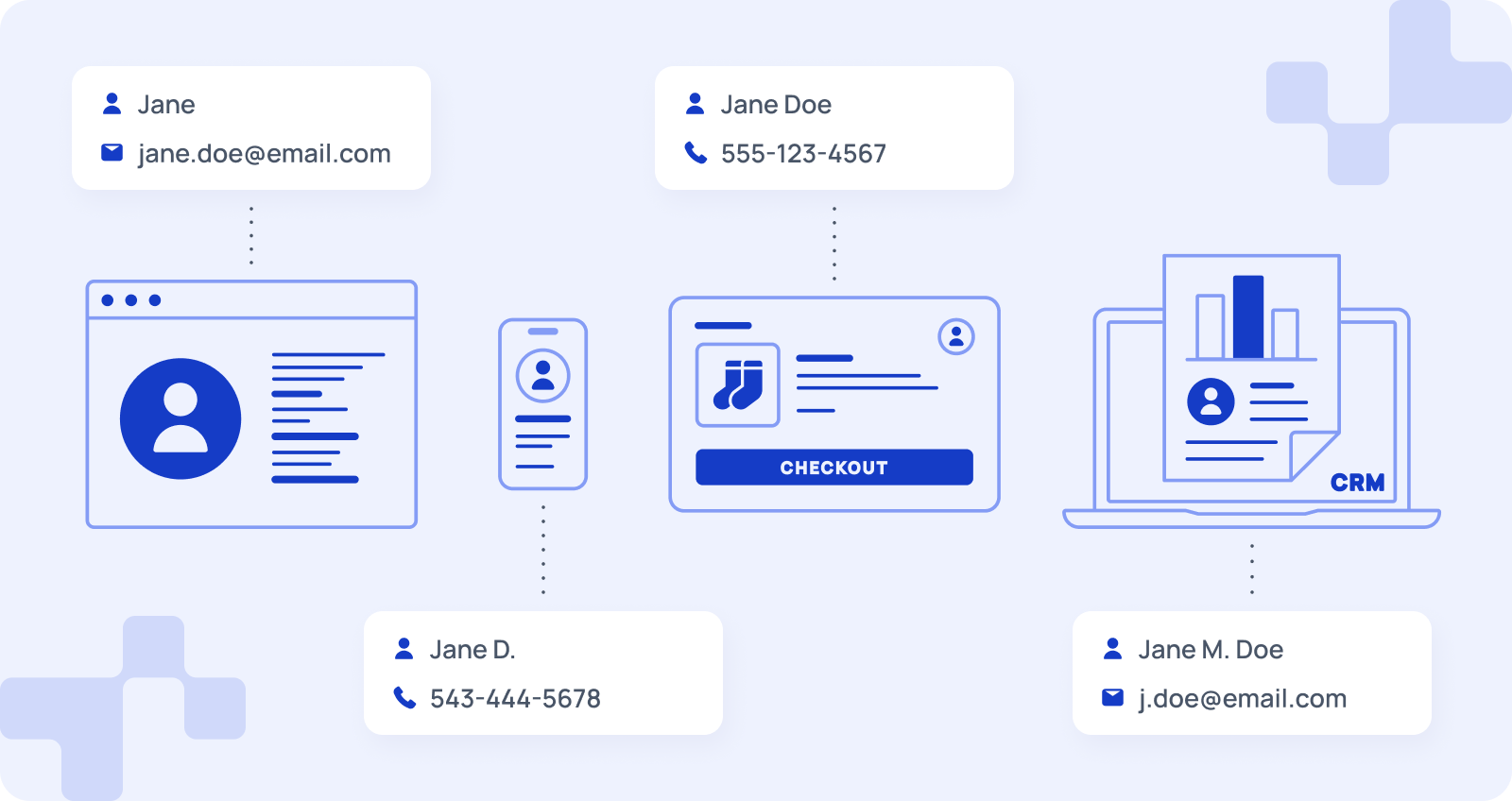
If you’re a marketer, you’ve dealt with at least one of these headaches:
- You’re not sure which customer profile is the “real” one
- You’ve sent duplicate messages because the same person exists in multiple places
- You’re dependent on technical teams to fix identity issues
- Your AI tools can’t perform well because the data they're learning from is unreliable
When identity is broken, every part of the marketing stack suffers. Personalization feels off. Segments are shaky. ROI takes a hit. The longer it goes unresolved, the harder it becomes to fix.
What makes Simon AI different?
Other platforms treat identity like a black box: either you trust their process, or you don’t.
"When identity is broken, every part of the marketing stack suffers. Personalization feels off. Segments are shaky. ROI takes a hit."
Simon takes a different approach: not only do we give marketers the tools they need to take control, we also provide real human support for the most crucial stages.
Here’s the process:
1. Entity Resolution
Entity resolution is the data-cleanup phase that normalizes, deduplicates, and cleanses incoming data before it even gets used in profile stitching. It’s the foundation of a trustworthy identity.
It’s also where we have a team of dedicated Identity Architects (that’s me, btw) to help. Just getting to this stage can mean a lot of effort for your internal team: determining which data sources you want to bring in, selecting a stable ID for your customer profiles, weighing different edge-case merge rules. If any of these sound like a headache, know that we have real human support to advise on (or drive) the whole thing.
2. Identity Resolution
This is where the magic happens. We connect the dots across disconnected data points to create a single, unified view of the customer. It’s your Customer 360, done right.
There isn’t any magic, for the record. Remember: no black boxes! The rules we use to combine your customer records have default recommendations, but they are also fully transparent and customizable. Ideally, everything relies on that one, agreed-upon stable ID, but that doesn’t always fit every business.
3. Advanced Survivorship
This one’s a relief if you have ever experienced poor attempts at identity in the past.
Survivorship rules determine which data “wins” when two records are merged. With Simon, you can set field-level rules like “prefer the most recent email” or “aggregate purchase history.”

It’s all customizable, and every decision is logged with complete transparency. And while our Identity team is here to advise you on best practices here, the tools remain entirely accessible to you, alongside everything else in Simon AI.
4. Self-Serve Identity Model Management
Do you need to reference the identity model rules you set up? What might a change do to your data? Go for it — with no engineering ticket required. Marketers can configure, test, and analyze identity models independently. Compare them against the current version, get full audit trails, and iterate as needed.
5. Units & Identity+
This is where the definition of “identity” can start to wander a bit, but I’m here for it. With steps 1-4, you can consistently identify and segment customers who provide their details (when they make a purchase, log in to your site, etc.). Awesome, and this is where you could stop and accurately say you have identity handled.
… but what about things they don’t tell you?
Enrich+
Going back to the Barnes & Noble example, if a customer walks into your shop, you make an educated guess about their preference based on their appearance. On the enterprise scale, you don’t just want to know what they’ve told you, but also what they haven’t. Gender, age, and income estimates are all key pieces of segmenting prospective shoppers, and they are things you don’t often have in your customer profile.
Enrich+ is Simon AI’s way of addressing that gap: let us know which demographic elements are helpful in your business, and we will provide them on your customer profiles. Perfect for segmentation, and all seamlessly integrated.

Identity+
How about when your customer is browsing your store, but you don’t recognize them as a customer, since they haven’t logged in? There’s a ton of missed potential here, especially when they abandon their cart, and you could be sending them an email about it, if only you recognized them as an existing customer for whom you have an email address on file.
Enter Identity+, Simon AI’s way of providing an ID for customers browsing your site that ties right back to your customer data. It’s the identity model you have already created, just amplified.
Not to bore you with the details (there are detailed docs, if you’re curious), but we leverage a partnership with a major publishing network to identify browsers who subscribe to most major newsletters/emails, and from there connect them to your customer data. Pretty amazing, and most importantly, already consented to and expected by your existing customers.

Match+
Lastly, what about when your customer leaves you an email or phone number, only for it to be completely different from the one they use for their social media browsing? Normally, this would make it impossible to find them, and if it wasn’t their primary email, good luck getting messages to them effectively!
Match+ enriches your first-party data by adding additional hashed email addresses (HEMs) and mobile ad IDs (MAIDs), increasing your ability to match customers across various advertising platforms and leading to higher match rates and improved return on ad spend (ROAS).
For instance, brands have seen match rate lifts of up to 43% on platforms like Meta after implementing Match+ . By expanding your reach and improving targeting accuracy, Match+ helps ensure that your marketing messages reach the maximum audience they can connect with.

Why this matters, especially for AI
Let’s talk about the elephant in every modern marketing room: artificial intelligence. AI promises incredible things: predictive segmentation, personalized experiences at scale, next-best-action recommendations… but it’s only as good as the data you feed it.
And if your customer profiles are messy or duplicated? AI is likely to learn incorrect information, make inaccurate predictions, and negatively impact your performance.
Simon Identity makes sure your AI gets the right foundation:
- Clean, deduplicated profiles so customer behavior is clear
- Custom survivorship rules that highlight the most relevant data
- Transparent identity resolution, so you know exactly how the data was created
Bottom line? Better identity = better AI = better results.
Who benefits? (Spoiler: Everyone). We designed Simon Identity with a wide range of users in mind. Here’s how it helps across the organization:
For marketing leaders
- Launch campaigns with confidence, knowing your data is clean
- Define business-specific rules for how customer profiles are built
- Build segments and personalizations on accurate, unified profiles
Understand your identity models without relying on engineers
For the C-suite
- Cut wasted spend caused by duplicate or inaccurate profiles
- Build brand trust through consistent customer experiences
- Lay the groundwork for scalable AI success
- Enable marketing to move faster without creating technical debt
For technical teams
- Reduce the backlog of identity-related requests
- Maintain full visibility with audit trails and compliance tools
- Seamlessly integrate with existing data infrastructure
- Empower business users while keeping enterprise-grade standards
How retailers use Simon AI for Identity
Let’s say you’re a retail brand with both ecommerce and in-store data. Without strong identity resolution, you might have the same customer listed three times, once from a website order, once from a loyalty program, and once from an in-store receipt. That means three email records, three addresses, and potentially three totally different “personas.”
With Simon AI, you can unify all that data using rules that match your business needs. Want to prioritize primary email addresses? Done. Aggregate lifetime value across brands? Easy. Use the most recent shipping address for direct mail? You got it. And you’ll always know exactly why a profile was merged.
Get started with Simon Identity today
Identity used to be the domain of IT. Today, it's a strategic advantage for marketers, especially as AI, privacy rules, and data complexity continue to evolve. If you don’t have control over your identity strategy, you’re flying blind.
"AI promises incredible things... but it's only as good as the data you feed it. And if your customer profiles are messy or duplicated? AI is likely to learn incorrect information, make inaccurate predictions, and negatively impact your performance."
With Simon’s approach to identity, you’re not just getting another tool. You’re getting a marketer-first, future-proof solution that:
- Cleans and connects your customer data
- Gives you complete control and transparency
- Powers the AI and personalization tools that drive growth
So if you're tired of second-guessing your data, fighting with engineering tickets, or wondering why your campaigns aren't hitting the mark, it’s time to fix your foundation.
Because in modern marketing, everything starts with identity.

When your customer base spans 200 markets and includes millions of shoppers, personalization isn't just a nice-to-have — it's a necessity. But how do you make it happen at scale?
Simon sat down to speak with Shaghig Babikian, CRM Lead at ASOS, about its journey implementing Simon AI and Braze to transform how they connect with customers. From abandoned carts to loyalty tiers, they've rebuilt their entire approach to data-driven experiences.
Here's what happened when one of fashion's biggest e-commerce players decided to get serious about marketing personalization.
So, what was the breaking point at ASOS that made you choose to overhaul your techstack?
Shaghig: Well, we were facing a pretty massive challenge. Imagine trying to deliver personalized experiences to 24 million active customers worldwide! We operate in over 200 markets with more than 850 brands, and our customers expect relevant content at every touchpoint. We simply couldn't do that manually or with our existing tech stack – we needed something more sophisticated to handle that kind of scale and complexity.
Let’s get into your playbook a bit. What’s making your personalization click?
Shaghig: It's built on three key ingredients. First, we needed to gain a clear view of our customers, so we created a unified customer view that pulls together all their behaviors, transactions, and demographics.
Second, we got much smarter about segmentation across all our touchpoints and platforms. And third – and this was huge for us – we built a robust automation engine for real-time campaigns that respond to customers' actions. When these three elements work together, that's when the magic happens.
That makes sense. I’m curious — how exactly does Simon AI fit into making all this work?
Shaghig: Simon AI is our data foundation. It provides us with a 360-degree customer view by connecting all our data sources. This allows us to be extremely precise with our targeting. What has been particularly valuable is how it allows us to build highly targeted audiences, not just for CRM but across our paid channels as well.
The integration with our website and app has been huge – we can now create personalized onsite experiences based on customer segments without constantly having to tap our development teams. That flexibility has been transformative.
Could you provide some examples of the personalized experiences you've created? What cool stuff are you doing with the customer data?
Shaghig: So many! We've created tailored loyalty experiences based on a customer's tier status. We deliver targeted incentives at just the right moment in the shopping journey. We've developed exclusive app features that are accessible only to specific segments.
Then there are the classics we've improved upon: abandoned cart recovery, reactivation campaigns for customers who haven't shopped in a while, churn prevention for at-risk customers, and special birthday or anniversary moments with offers that genuinely feel relevant to each individual.
How do you get Simon AI and Braze to play nice together? What's that dynamic like?
Shaghig: They're like perfect partners. Simon AI handles all the heavy lifting on the data side – collecting, unifying, and segmenting customer information to create these really smart audiences. It also determines when to trigger actions based on customer behavior.
Then Braze takes over as our execution platform, orchestrating and delivering messages across email, push notifications, and in-app channels. The native integration between them means everything happens seamlessly – traits sync automatically, and channel actions trigger instantly. This allows us to deliver those real-time, omnichannel experiences without a significant amount of technical overhead.
Let's talk results. What kind of wins are you seeing from all this?
Shaghig: The numbers speak for themselves. We've generated $77 million in incremental revenue year-over-year. We maintain and update 50 million customer profiles daily. We're leveraging 80,000 products to deliver truly personalized recommendations.
But beyond the numbers, we're seeing much stronger engagement and customer satisfaction because we're finally delivering the kind of relevant experiences people expect from a fashion leader.
What's next on your radar? Where are you taking this strategy from here?
Shaghig: We've built our roadmap around three principles that stem from analyzing what works best: focusing on high-impact initiatives that drive engagement and conversion; finding the right balance between reach, efficiency, and precision; and ensuring every single customer interaction feels personal, relevant, and timely.
We're mapping all our initiatives across the whole customer journey, from initial reach and conversion to retention and re-engagement. The exciting part is that as our capabilities mature, we can become even more sophisticated in how we use data to create these compelling shopping experiences.

Marketing teams have more data than ever, yet many still struggle to measure what truly impacts revenue. Dashboards are packed with vanity metrics — impressions, social shares, and email open rates — but those numbers don’t reveal customer health or long-term profitability.
Focusing on the wrong data leads to wasted budgets, missed revenue opportunities, and campaigns that fail to drive real business outcomes. The brands that win focus on metrics that drive revenue, not just activity. Measuring acquisition, engagement, and retention ensures that marketing efforts lead to sustainable growth, not wasted spending.
This article highlights the customer marketing metrics that matter most: acquisition costs, engagement, customer value, and retention. These numbers reveal how well a marketing strategy attracts, converts, and retains valuable customers.
1. Customer acquisition cost (CAC): Efficiency over volume
Acquisition cost determines whether your marketing strategy is sustainable or self-defeating. When you pay too much to acquire customers, you eat into profitability before they've even made their second purchase.
The reality of today's market makes this challenge even more pressing. Digital advertising costs continue to climb – paid search spend jumped 6% year-over-year in Q2 2024, while paid social spend grew by 13%, mainly because of higher ad prices.
As competition for attention intensifies, campaigns that drive traffic but fail to attract high-value buyers become budget vampires, draining resources without delivering sustainable growth. When marketing teams track customer acquisition cost (CAC) alongside customer quality metrics, they can make smarter, more targeted investments.
Key metrics to track
- Customer acquisition cost (CAC): Total marketing spend divided by new customers acquired
- Cost per acquisition (CPA): How much you’re paying per conversion across different channels
- New customer rate: Percentage of total sales from new customers vs. returning customers
- Campaign performance: ROAS (return on ad spend) and conversion rate, with a focus on customer quality
How to improve these metrics
Marketers can lower their customer acquisition costs (CAC) by improving audience segmentation and refining campaign targeting. For example, a brand selling premium skincare products can analyze its highest-spending customers and create lookalike audiences for paid ads. Instead of broad targeting, focusing on this high-value segment reduces wasted spend and increases conversion rates.
Faster campaign execution also reduces CAC. Delayed launches often mean missing out on timely opportunities, such as seasonal promotions or viral trends. Brands that automate workflows and use AI-powered optimization can push campaigns live in days instead of weeks, capturing high-intent customers at the right moment.
2. Customer engagement: Predicting future behavior
Engagement serves as one of the strongest predictors of future retention. Customers who actively interact with a brand across multiple touchpoints are substantially more likely to make repeat purchases, whereas disengaged customers signal a high risk of churn.
Many brands track engagement in superficial ways, such as counting clicks and email opens, rather than focusing on meaningful interactions. There's a world of difference between a customer who opens an email but never makes a purchase and one who browses product pages, responds to SMS campaigns, and leaves reviews.
When you track engagement in ways that reflect genuine customer interest, you can strengthen retention efforts and build long-term loyalty.
Key metrics to track
- Engagement score: A composite metric tracking interactions across channels (email, SMS, website, in-app)
- Response rates: The percentage of customers who engage with campaigns (beyond just opening an email)
- Customer health score: A predictive measure of customer activity and likelihood to convert again
How to improve these metrics
Effective engagement starts with delivering content and offers that align with observed customer behavior. For example, a beauty brand might track customers who engage with tutorials on social media but haven’t yet made a purchase. Sending a personalized email featuring products used in those tutorials, along with a limited-time discount, encourages action while reinforcing the customer’s interest.
An omnichannel strategy also drives engagement. Leading brands also recognize that customers interact across multiple platforms throughout their journey. Rather than running isolated campaigns, they design marketing programs that continue conversations across email, SMS, web, and mobile apps.
3. Customer value metrics: Revenue impact over single transactions
One-time purchases don't build sustainable businesses. Smart marketing teams focus on increasing customer lifetime value rather than solely pursuing new customer acquisition.
Acquisition costs continue to rise, making it more important than ever to maximize revenue from existing customers. Tracking CLV, purchase frequency, and average order value (AOV) helps marketing teams optimize retention strategies, campaign investments, and product promotions.
Key metrics to track
- Customer lifetime value (CLV): Projected revenue from a customer over their entire relationship with your brand
- Average order value (AOV): How much customers spend per purchase
- Purchase frequency: How often customers come back to buy again
How to improve these metrics
Increasing customer value starts with targeted retention strategies. A subscription meal kit company, for instance, can analyze purchasing behavior to identify customers who downgrade their plans before eventually churning. The company encourages longer commitments and increases overall revenue per customer by offering personalized discounts or bundling add-ons at a lower price point.
Better segmentation also drives higher CLV. An online fashion retailer might notice that customers who purchase accessories return sooner than those who buy apparel. Creating exclusive accessory bundles or personalized recommendations based on past purchases encourages repeat transactions and maximizes customer value.
4. Customer retention: The true driver of profitability
Retention fuels profitability. Acquiring a new customer costs significantly more than keeping an existing one, yet many brands still allocate disproportionate resources to acquisition rather than keeping their best customers engaged.
If given the right incentives, customers who have already made a purchase are more likely to make another purchase. Tracking retention rates, churn indicators, and win-back success rates provides insights into what keeps customers engaged.
Key metrics to track
- Retention rate: Percentage of customers who continue buying over a set period
- Churn risk indicators: Early warning signs like declining purchase frequency or disengagement
- Win-back success rate: Percentage of lapsed customers who return after targeted win-back efforts
How to improve these metrics
Retention marketing is about staying ahead of churn. A fitness subscription app, for example, can track users who gradually decrease their session frequency. Sending proactive check-ins, personalized workout recommendations, or a one-time reactivation offer can re-engage these users before they cancel.
Strategic win-back campaigns also deliver significant ROI. An online bookstore might notice that customers who haven't made a purchase in six months are unlikely to return on their own. Sending a personalized email with a discount on their favorite book genres, along with a reminder of their past purchases, helps reconnect them with the brand in a meaningful way.
Customer marketing should be data-informed and outcome-focused
We've all sat in those meetings where someone proudly presents impressive-looking metrics that don't translate to revenue. Marketing teams everywhere defend high open rates while actual conversion numbers tell a completely different story.
The truth is, marketing that moves the needle is focused on tracking what matters. When companies shift focus to measuring customer lifetime value, they often discover their "most successful" campaigns are attracting one-time buyers who never return.
For teams overwhelmed by dashboards and struggling to connect marketing efforts to actual revenue, it may be time for a different approach.
Simon AI helps marketing teams cut through the noise and focus on metrics that drive sustainable growth. Let's discuss how we can help transform customer insights into a competitive advantage for your company.

Every interaction with your brand shapes how a customer perceives it. From awareness to post-purchase engagement, these interactions determine whether they buy from you or look elsewhere. It’s not three strikes and you’re out — one mistake can cost you the purchase.
Poor customer experiences cost businesses $3.7 trillion last year. That lost revenue doesn’t disappear but rather flows into other channels… like your competitors. When you miss an opportunity, it’s a chance for another company to build a relationship with a new loyal customer.
Negative experiences also precede your company name in reviews and bad word of mouth, eroding trust and making it harder to attract shoppers. This churn creates a compounding effect: the more customers you lose, the harder it becomes to recover, both financially and reputationally.
Let’s stop the cycle before it starts. These are the most common pitfalls in the customer journey, with examples from the graveyard of deceased businesses. Spooky! Let their tales be a warning to you.
Ignoring the customer’s point of view
Too many leaders laser focus on their wants and needs to the detriment of customers. A company with its blinders on ignores the circumstances around it, and it can cost it its status at any stage of maturity.
From validating your business idea to updating your website, everything should be done with customer feedback. If you ignore user testing, shoppers can walk away from their carts or leave forms unfinished because of the website issues piling up. Looking at the customer’s point of view requires anticipating their needs and proactively working toward a better customer experience.
If you don’t conduct user testing, you run the risk of building on assumptions. We’re often too close to our product to see its imperfections, and this ignores the emotional aspects of customer interactions (like the frustration of long load times, or the anxiety of buying an item and never receiving a shipping notification).
Real-world example: Toys “R” Us
Once the dominating store for retail toys, Toys “R” Us is a cautionary tale against ignoring the customer’s point of view.
If Toys “R” Us had been more proactive in gathering customer feedback, it would have noticed shoppers' preferences trending heavily toward online retail. Instead of building its own digital presence, the brand outsourced online sales to Amazon with its logo and reputation attached to every purchase.
Unfortunately for Toys “R” Us, shopping on Amazon means a wealth of other similar products to compare. This meant shoppers might go for other listings offered on Amazon at better prices. Toys “R” Us neglected that parents would be bargain hunting by comparing prices online, and it had given shoppers the perfect place to do that by handing their digital experience off to Amazon.
If Toys “R” Us had wanted to invest in their physical locations, it failed at that gambit, too. Competitors like Lego and Disney were destination toy stores, with movies playing, toy demos, eye-catching designs, and enthusiastic staff. They were toy stores where parents could shop and kids could play. Toys “R” Us didn’t invest in the experience, sticking to a traditional warehouse-like format.
Toys "R" Us filed for bankruptcy in 2017. This is a cautionary tale against ignoring the customer POV. Beware.
Superficial personalization
“Dear [NAME].” This is the wild call of a company using superficial personalization. If this is the extent of your personalized marketing, you’re prey to one of the most common customer journey pitfalls.
Customer data is at a modern marketer’s fingertips. Because data is so readily available, many platforms offer you surface-level personalization options under the guise of harnessing data. Customers can sniff out these impersonal personalization attempts because they’re overplayed.
For instance, most e-commerce platforms serve product recommendations. With poor tailoring, the recommendations come off as tone deaf or irrelevant. If you don’t use a shopper’s search or purchase history, you’re likely making too many off-base recommendations and missing out on upsell opportunities.
Companies also miss the mark with one-size-fits-all loyalty programs. Layman’s advice recommends they make one, so they do. Then, they don’t do any additional personalization to make the loyalty program tailor-made for each loyal customer.
This all happens because we aren’t leveraging available customer data meaningfully. The right tools help you activate data in real-time for hyper-personalized campaigns that you could only achieve through some level of automation. (And Simon AI could help you do this!)
Real-world example: Fab.com
After its successful launch in 2011, Fab.com was selling off its assets to PCH by 2015. The company had raised $336 million to start and sold for $33 million. What happened?
The once-popular, design-focused e-commerce platform forgot the heart of its brand: personalization.
Fab.com once sold a hand-picked, niche inventory of about 1,000 items, but it needed to scale. The personalization technology it used couldn’t keep up with demand. When that number jumped to 11,000 items, Fab.com lost sight of its value proposition, offering products you could find on competitors like Amazon for cheaper. It also dropped the flash sale offering, which was a key differentiator.
Fab.com enabled personalized recommendations by letting users link the app with other social sites. However, their issue was scaling. Perhaps the technology hadn’t caught up with this business idea (and Fab.com’s overinflated spending), but users were finding less niche products that reminded them of why they joined the app in the first place.


Fab.com’s failure highlights how even online-only businesses, despite having access to vast amounts of data, can fail to implement meaningful personalization. Superficial efforts attract customers initially but don’t build long-term loyalty.
Simon AI™ Social Moments addresses this exact gap by scaling personalization through live social and cultural signals, so relevance isn’t lost as catalogs and audiences grow.
Disjointed customer experiences
Have you ever downloaded an app from a respected global company and found its functionality…lacking? Slow load times, unclear hierarchy, and dead links plague the apps of some of our biggest household names.
Disjointed customer experiences threaten the entire journey. These disconnects result from internal and external disparities.
One of the most common issues is inconsistent messaging across channels. This can occur when you don’t frequently audit channels, unearthing old, deprecated information, and keeping all information in alignment with current practices. (Think of all the old help pages that contain outdated policies. It’s even more embarrassing if it’s an automated email lining the customer journey with inaccurate information.)
Inconsistent messaging can also come from disconnected offline and online experiences. If phone support is seamless but mobile support is tedious, guess which channel customers will use! Your brand should follow the same code no matter the channel.
Discord also comes internally. Inconsistent messaging is usually the result of siloed departments and data. For instance, your marketing team updating all the content pages might not be aware of the new cancellation policy CS follows.
This disconnect between teams causes repetitive customer information requests that bog your support teams down, adding more frustration to the customer experience.
Real-world example: HomeGoods
HomeGoods is thriving, but its online store is long dead. The company closed its e-commerce site in 2023 in favor of buckling down on in-person retail experiences. This is contrary to modern customer marketing wisdom. Why?
Like Fab.com, HomeGoods thrives by offering customers a “treasure hunt” — the feeling of picking up an item that seems unique to you. But for HomeGoods, rolling out an e-commerce site meant a disjointed customer experience.
The products HomeGoods offered online had to have enough stock to justify the website listing. Each in-person store’s stock is different, meaning it’s difficult to offer a consistent online experience.
The site’s index didn’t align with the in-store customer journey, with hierarchy like “Rugs” and “Furniture & Lighting.” In-store shoppers meander until they find their treasure; there’s a TikTok trend dedicated to the random and delightful sense of discovery at HomeGoods.
There isn’t a good way to translate HomeGood’s in-store sense of discovery to an online market — yet. But personalization capabilities in the digital sphere grow more efficient by the day.
Failure to measure and optimize
A company without actionable data is on a slow path to obsolescence.
A big failure of many companies is a lack of clear success metrics. How can each function tie its success to a hard number?
One of the most important OKRs is customer lifetime value, and it’s staggering how few companies attempt this calculation. When they ignore the potential of repeat customers, they also ignore early warning signs of churn that would be key to expanding CLTV.
If you don’t optimize based on data, you miss opportunities to proactively improve your marketing and instead work reactively. Because customer marketers are usually stretched thin, we rarely have time to reflect on data, but it’s the most important task we can undertake.
Real-world example: Blockbuster
We all saw the decline of Blockbuster before the fall, so why didn’t the company itself react? It failed to measure and optimize the customer experience.
At first, Netflix wasn’t the home streaming service that brought convenience to the couch; it started with convenience at the mailbox with DVD-by-mail service. Customers who preferred to rent movies were expecting a night in, and driving to a physical Blockbuster location added another step on their to-do list.
Redbox, too, was growing in popularity because customers could combine stops (say, a grocery run and a movie rental) into one, rather than making a separate trip to Blockbuster.
Before Blockbuster went under, news outlets caught onto the rising popularity of Netflix and Redbox…and the fall of Blockbuster.
If Blockbuster had reacted to analytics and optimized its business, it might have had a chance in the digital world.
Action Items for Improvement
The customer journey is often broken. How do we correct course? We can break down our triage into immediate steps and long-term prevention strategies.
Immediate steps
For fast returns, let’s focus on what we already work with.
Customer feedback offers warning signs before fallout. That’s why you need to implement comprehensive customer feedback systems. If you’re tight on bandwidth, customer chatbots and asynchronous feedback are paramount. Bake survey and review requests into your purchasing process for proactive feedback!
You can also make customer experience teams cross-functional. Open up communication with other teams and create a routine for this communication.
Keeping the theme of unifying, you can also unify customer data platforms for quicker data consolidation and activation. The task of measuring and optimizing from data becomes less daunting if you don’t have to gather it manually from disparate sources. Thankfully, unifying customer data can be simple with the right platform!
Once you unify data platforms, establish clear metrics and monitoring processes so that you report regularly on those results. That keeps you from missing any fluctuations.
Long-term strategies
To stop the cycle of damage control, you’ll also need sound long-term customer marketing strategies.
The first shift is cultural: build a culture that is customer-centric. Customer-obsessed companies are close to their shoppers, keeping feedback as a continual conversation. Customer-centric companies also invest in personalization company that makes customers feel valued, reducing churn.
Mapping the customer journey reveals gaps. To reduce these gaps in the long term, create seamless omnichannel experiences, lest you end up like HomeGoods’ shuttered e-commerce store. Omnichannel experiences are easier to achieve with platforms that can link campaigns across channels (and with teams that work cross-functionally — see step 1).
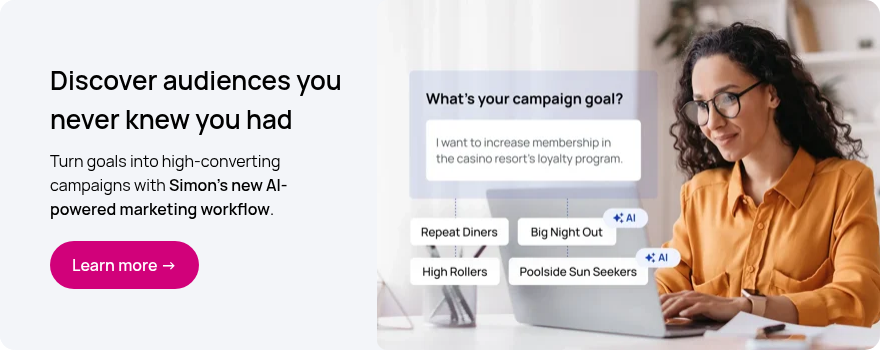
Lastly, develop predictive analytics capabilities that will catch changes in customer behavior before it’s too late. Predictive analytics can identify seasonality, trends, churn, retention, and other factors that will flag opportunities and issues.
Conclusion
Following the same best practices as competitors no longer cuts it. Customers want personalized experiences that are unique to your company; many pitfalls occur from bland, sloppy approaches.
That’s why it’s important to continuously improve: your skills, your campaigns, and your tech stack. Better technology gives you the edge on all three, so consider a CDP to activate customer data. Don’t end up in the graveyard of poor customer experiences!
