Blog

Unlock true customer 360
Seamlessly unify and activate customer data from your cloud data warehouse and beyond.


.webp)


Power 1:1 personalization
Deliver hyper-personalized customer experiences to forge deeper connections and transform casual customers into loyal advocates.

.webp)
.webp)
.webp)
.webp)


.webp)


.png)


Boost your bottom line
Discover the industry's latest tips, tricks, and trends to elevate your customer marketing strategies.



.webp)


.png)

.webp)
.webp)
.png)


.png)


Connecting with customers meaningfully is the cornerstone of any successful marketing strategy. But with so many touchpoints and channels to navigate, it can feel overwhelming to know how to build personalized experiences that keep customers engaged, increase lifetime value, and reduce churn.
This guide covers a range of actionable customer engagement tactics, from Abandoned Cart Recovery to Zero-Party Data Activation, powered by unified data and real-time insights.
Whether you're working on retargeting campaigns or boosting customer retention, consider these 26 essential tactics as a practical framework for building stronger relationships and driving real results at every stage of the customer journey.
Let’s dive in.
A: Abandoned Cart Recovery
Re-engage customers who add items to their cart but don't complete the purchase, using targeted messaging and incentives based on cart value, products selected, and browse behavior.
Example: A luxury fashion retailer sends triggered emails featuring abandoned items with social proof messaging and a 10% discount that expires in 24 hours, achieving a 25% recovery rate.
B: Behavioral Segmentation
To deliver more relevant experiences, group audiences based on their interactions across channels, including website behavior, email engagement, purchase patterns, and app usage.
Example: A streaming service segments viewers based on content preferences, viewing times, and device usage to promote relevant new shows and personalized upgrade offers.
C: Conversion Rate Optimization
To improve the percentage of visitors who take desired actions, test different customer journey elements, from landing pages to checkout flows, using both A/B and multivariate testing.
Example: A subscription meal kit service tests different combinations of social proof, pricing display, and trial offers on their landing page, increasing sign-up conversion by 32%.
D: Data Unification
Connect and consolidate customer data from multiple sources, including CRM, e-commerce, email, mobile apps, and point-of-sale systems, into a single customer view for improved targeting and personalization.
Example: A retail brand combines in-store purchase history, online browsing patterns, email engagement, and loyalty program data to create comprehensive customer profiles for targeted holiday campaigns.
E: Email automation
Deploy behavior-triggered email campaigns that respond to customer actions and lifecycle stages with personalized content, optimal send times, and dynamic recommendations.
Example: A beauty retailer automatically triggers a replenishment series 60 days after purchase, featuring product education, user-generated content, and a timely reorder discount.
F: First Purchase Programs
Convert first-time buyers into repeat customers through tailored communications, educational content, and targeted offers based on their initial purchase behavior.
Example: A D2C brand enrolls new customers in a 45-day program that includes product tips, complementary item recommendations, and a special discount on their second purchase. This increases the repeat purchase rate by 40%.
G: Geographic Targeting
Tailor content, offers, and experiences based on a customer's geographic location, considering local weather, events, and regional preferences.
Example: A marketplace automatically adjusts featured services, pricing, and availability based on zip code while incorporating local weather data to promote seasonal services.
H: Holiday Campaign Planning
Coordinate peak season marketing messaging, offers, and experiences across channels, with specialized segmentation and timing based on historical customer behavior.
Example: A department store creates targeted Black Friday campaigns with different timing and offers for in-store vs online shoppers, early birds vs last-minute buyers, based on past holiday shopping patterns.
I: Inactive Customer Campaigns
Target customers who haven't purchased or engaged within a specified timeframe, using personalized messaging and incentives based on their historical preferences and behavior.
Example: A meal delivery service identifies customers who haven't ordered in 60 days and sends a personalized win-back series featuring their favorite cuisines and progressively stronger offers.
J: Journey Mapping
Visualize and optimize customer touchpoints across the entire lifecycle, from acquisition through loyalty, identifying key moments and opportunities for personalization and engagement.
Example: A financial services company maps distinct journeys for different customer segments, from early-career investors to retirees, with tailored content and product recommendations at each stage.
K: KPI Tracking
Measure key performance indicators across marketing campaigns and customer interactions, including conversion rates, customer lifetime value, and return on ad spend.
Example: A subscription box service tracks acquisition costs, retention rates, and customer lifetime value by acquisition channel and cohort to optimize marketing spend and product offerings.
L: Loyalty Programs
Reward repeat purchases and brand advocacy through points, perks, and exclusive experiences while gathering valuable customer data for personalization.
Example: An airline manages a tiered loyalty program offering escalating benefits from priority boarding to suite upgrades, driving engagement through personalized milestone notifications and challenge campaigns.
M: Marketing Automation
Automate marketing processes and customer communications based on behavior triggers, segmentation rules, and personalization logic across channels.
Example: A banking app automatically triggers personalized notifications and offers based on account activity patterns, like suggesting a high-yield savings account when checking balance exceeds certain thresholds.
N: Net Promoter Score (NPS) Analysis
Track and analyze customer satisfaction and loyalty metrics through systematic feedback collection and response analysis, using insights to improve customer experience and identify advocacy opportunities.
Example: A subscription box service segments customers based on NPS responses, triggering targeted retention campaigns for detractors and referral programs for promoters. This results in a 20% increase in customer advocacy.
O: Order Confirmation Emails
These emails transform standard purchase confirmations into personalized marketing opportunities with relevant recommendations and engagement prompts.
Example: A food delivery service enhances order confirmations with personalized restaurant recommendations, time-based reorder prompts, and loyalty program progress updates.
P: Predictive Analytics
Leverage historical customer data and machine learning to forecast future behaviors, identify likely churn risks, and anticipate customer needs for proactive marketing.
Example: An e-commerce company uses purchase history and browsing patterns to predict the next likely purchase timing, automatically triggering personalized campaigns when customers are most likely to buy.
Q: Quick Wins Analysis
Identify and implement high-impact, low-effort optimization opportunities across the customer journey using data analysis and testing methodologies.
Example: A marketplace identifies and fixes top conversion drop-off points through lightweight A/B tests, improving checkout completion rates by 15% within one month.
R: RFM Segmentation
Segment customers based on recency of last purchase, frequency of purchases, and monetary value spent to identify and target different customer value tiers.
Example: A retailer identifies and rewards VIP customers based on RFM scores, targeting their top tier with exclusive holiday preview events and early access to sales.
S: Seasonal Campaigns
Plan and execute marketing programs with coordinated messaging, offers, and experiences across channels around peak business periods.
Example: A travel site launches targeted summer vacation campaigns with personalized destinations and pricing based on past booking history and browse behavior.
T: Transactional Emails
Optimize required notifications with marketing opportunities while maintaining high deliverability and engagement rates.
Example: A fintech app includes personalized financial tips and relevant product recommendations in payment confirmation emails, driving additional product adoption.
U: Upsell Campaigns
Promote premium products to existing customers based on their purchase history, usage patterns, and behavioral signals.
Example: A streaming service encourages individual subscribers to upgrade to family plans by highlighting shared viewing patterns and family-friendly content preferences.
V: VIP Programs
Deliver exclusive experiences to high-value customers through targeted perks, early access, and personalized service.
Example: A luxury retailer offers top-tier customers private shopping events, personal stylist services, and early access to new collections based on their spending patterns.
W: Welcome Series
Create automated email journeys for new subscribers that build engagement through personalized content and offers.
Example: A meal kit service introduces new customers to their service through a series of personalized recipe recommendations, cooking tips, and targeted promotions.
X: X-Sell Campaigns
Promote related products based on purchase history, browse behavior, and product affinity analysis.
Example: A fashion retailer promotes coordinating accessories within 24 hours of a dress purchase, featuring personalized shoe and jewelry recommendations based on the customer's style preferences and past purchases.
Y: Yield Management
Optimize revenue through dynamic pricing and inventory management based on customer demand, historical patterns, and real-time market conditions.
Example: An e-commerce marketplace automatically adjusts product pricing and promotion levels based on inventory levels, competitor pricing, and demand forecasts to maximize revenue per customer.
Z: Zero-Party Data
Activate directly collected customer preferences and intentions through quizzes, surveys, and preference centers.
Example: A beauty brand personalizes product recommendations and content based on skin concerns and beauty goals collected through an interactive quiz.
Ready to personalize the marketing experience?
The best customer marketing strategies start with great data, but they succeed when you can activate that data across all your channels — quickly, easily, and precisely.
Simon AI makes it easier to execute every one of these strategies. Our platform helps you unify customer data, automate personalized campaigns, and optimize marketing performance across channels without needing a team of engineers.
Simon AI is more than a CDP. We give marketers the data, technology, and expert resources they need to stop guessing and start delivering what customers want.
Ready to see how Simon AI can power your customer marketing strategy? Take a virtual tour.

For marketers today, having powerful customer data platforms isn't enough — marketing success requires the right blend of strategy, technology, and expertise. At Simon AI, our Services team plays a crucial role in helping clients unlock the full potential of their customer data and drive meaningful marketing outcomes.
We sat down with Paige Rotar, who leads Simon AI's Services team, to discuss how they're helping clients navigate the evolving CDP landscape while driving impressive results through innovative approaches to campaign strategy, identity management, and AI-powered optimization.
Let's jump right in with the challenges marketers face today. What are the common roadblocks you see when brands try to turn their customer data into effective campaigns?
Marketing has never been more complex than it is today. The biggest challenges we see often come down to three main areas: connecting data and marketing strategies to actual outcomes, fully adopting and leveraging the technology they already have, and uncovering hidden insights in their data. Additionally, if the hurdle is simply having enough resources to execute effectively, we can help fill that gap as well.
That’s interesting — how have these challenges impacted a brand’s ability to actually execute successful campaigns?
What we’re seeing is that many brands struggle to unlock the full potential of their customer data, which leads to missed opportunities and campaigns that don’t perform as well as they could. That’s why we designed our Lifecycle Services program: to bridge this gap. It combines human expertise with data-driven insights and AI-powered recommendations to help brands maximize their marketing ROI.
You mentioned that Simon’s services bridge these gaps. Can you walk us through your approach to helping customers?
Sure! First, we start with our core CDP capabilities. You’ve probably heard the term “customer 360” thrown around a lot — that just means our CDP sits on top of your customer data and creates a unified customer profile with that data. We first ensure a stable identifier is in place, and from there, Simon helps optimize targeting, segmentation, and predictive insights.
Our Lifecycle Services takes this foundation to the next level. We use the data and segmentation strategies you have in place but combine them with expert marketing strategies, actionable insights, and AI-driven recommendations to help transform campaigns into high-performing, revenue-generating engines.
So, whether a client needs help refining their marketing strategies, connecting their tech to their strategy, executing campaigns, or continuously optimizing performance using our strategists and latest AI innovations, we’re there to support them every step of the way.
Let’s dig into that. What does strategy engagement actually look like for your customers?
Every engagement starts with understanding what success looks like for that specific client. What’s their focus? Success criteria? What baseline metrics do they want to measure or optimize against?
We conduct an initial audit of their customer experience, then design or iterate on their personalized omnichannel strategies to improve engagement and conversions. Depending on their needs, we might focus on campaign strategy design, content and personalization recommendations, and segmentation strategies.

Our new AI features are exciting and have been useful for the entire support process. It helps our customers make smarter decisions about who to target, what content to deliver, and how to continuously improve their campaign outcomes.
We often hear about execution being a bottleneck. Can you share an example of how your team helps clients speed up their campaign execution while maintaining its effectiveness?
Absolutely. One of our key approaches is to first identify optimizations that can be applied across multiple campaigns. We first test our hypothesis on an underperforming campaign and then extend our learnings to other campaigns that can benefit from the same improvement to scale ROI and ensure they get the most out of Simon’s capabilities.
Email deliverability is still a massive concern for marketers. How does your team help ensure messages land in the right inboxes?
Our Email Deliverability Services combine CDP-powered insights with expert guidance to optimize send time, enhance segmentation and personalization, and ultimately, ROI. We’ve developed a three-tiered service model that lets clients start with essential monitoring and scale up to comprehensive program management as needed.
By leveraging first-party data for personalization and advanced segmentation, we help ensure messages not only reach the right audience but also arrive at the right time across all channels. We’re focused on protecting and maximizing this revenue stream.
Let’s talk about identity management. How does Simon’s services help brands build that essential 360-customer view you mentioned earlier?
Identity management is incredibly important to any business that needs accurate, stable customer records — which, let’s be honest, is pretty much everyone these days.
We start with a thorough audit of existing data sources, then conduct an identity workshop to determine the best practices that make sense for their specific business. From there, we implement those practices into a single, consolidated customer table.
In some cases, we might focus on establishing a single customer ID. For others, it might be as comprehensive as running deduplication and data cleansing processes. The end result for all these cases is to have a unified and accurate customer table that becomes the foundation of effective marketing.
You’ve spent your entire career in MarTech. How has that experience shaped how you help clients succeed?
Having consulted in MarTech across various brands and industries, I’ve seen firsthand how technology adoption can make or break marketing success. Although knowing marketing best practices is important, understanding the tech behind the curtain — and how to optimize it — is equally important.
It’s not the technology itself, and sometimes not even a team’s marketing expertise, holding marketers back. It’s the process of adopting and fully utilizing new tech like AI. Thankfully, my experience helps me quickly spot where clients might be struggling and work with them to drive the results they’re looking for.
The CDP market is evolving rapidly. What excites you most about leading the Services team during this transformative period?
What really excites me connects back to our “Anti-CDP” approach. We know that having a CDP alone isn’t enough to drive positive marketing outcomes. The magic happens when you blend the right strategy, people, and technology together.
That’s where our services team comes in. We’re the people who help make that blend work. And now, with AI in the mix, we can make even more sophisticated recommendations based on exponentially more data.
Looking ahead, how do you see marketing evolving, and what opportunities do these changes create for marketers?
We’re seeing huge momentum in personalization at scale, AI and machine learning, predictive analytics, omnichannel marketing, and first-party data strategies. What’s exciting is that our product team stays ahead of these trends, which allows our services team to leverage cutting-edge capabilities, like our AI beta, to support use case recommendations and strategy development.
One final question: What should marketers know about working with Simon AI’s Lifecycle Services team?
At the end of the day, we’re focused on three things: making your life easier, your processes more efficient, and your data more streamlined. Beyond that, everything we do ties back to driving incremental return on investment and customer lifetime value for your org.

Cross-selling is often overcomplicated, leading many marketers to delay implementing a qualitycross-sell marketing strategy. But you can launch an effective program in just four weeks by focusing on the essentials and building incrementally. This quick-start guide will walk you through the process, starting with choosing the right strategy for your business.
Step 1: Choose your cross-sell strategy
Your cross-selling approach should align with your business goals, product portfolio, and customer journey. Our most successful customers typically start with one of three core strategies, each serving a distinct business objective:
The completion strategy

Use the completion strategy to help customers build complete solutions by suggesting natural product pairings. The works particularly well for retailers who offer complementary products that enhance a customer’s initial purchase. My, wouldn’t these throw pillows look awfully nice on your brand-new couch?
The evolution strategy

Guide customers to more advanced products as their needs grow and skills develop. This approach is ideal for brands with tiered product lines or serve customers through different life stages. Looks like someone's ready to graduate from smartphone snaps to "Oh my god, who's your photographer?”
The ecosystem strategy

With the ecosystem cross-sell strategy, you can show how multiple product lines work together to create better experiences across categories. This might be your cross-sell strategy if your company offers diverse but interconnected product lines. Because one smart device is lonely, but a smart home is a party!
To determine which cross-sell strategy to start, consider your current product mix and customer behavior.
- Are you selling items that complete a look/solution? Start with the completion strategy
- Do your customers’ needs typically evolve over time? Embrace the evolution strategy
- Are you focused on promoting multiple product lines that work together? The ecosystem or connected strategy could be your answer

Step 2: Set up your customer data foundation
Comprehensive customer data is invaluable — but don’t let it be the enemy of good cross-sell marketing. Start with the data points you already have and build from there — even two or three can get you started.

Purchase history
- What to track: Products bought, purchase frequency, category preferences
- Why it matters: Shows natural product combinations and buying patterns
- Quick win: Focus on your top 25% of customers to spot common purchase pairs
Browse behavior
- What to track: Product views, category interests, time spent
- Why it matters: Reveals what customers are actively considering
- Quick win: Look for customers viewing similar items multiple times
Engagement metrics
- What to track: Email opens, site visits, app usage
- Why it matters: Indicates interest and readiness to buy
- Quick win: Note which product categories drive the most engagement
Step 3: Set up your cross-sell triggers by strategy
Your cross-sell timing is just as important as the products you recommend. Here's when and how to reach out based on your chosen strategy.
Completion strategy: Strike while the iron’s hot
Post-purchase (48 hours): The excitement of a new purchase creates the perfect moment to suggest complementary items.

Send a personalized email showcasing how additional products enhance their recent buy. "Love your new coffee maker! Here's how our premium filters can make every cup taste even better."
Browse pattern (3+ views): When customers return to the same product multiple times, they show serious interest. Use website notifications to highlight related items that complete the experience.
"Noticed you've been eyeing that stand mixer? These attachments turn it into a pasta-making powerhouse!"
Cart abandonment (4 hours): Sometimes, customers need a gentle nudge with alternatives. Follow up with similar products at different price points or with slightly different features.
"Still deciding? Shoppers who viewed this also loved..."
Evolution strategy: Grow together
Seasonal transitions: Help customers prepare for upcoming changes with timely recommendations. Show your fall/winter collection to summer clothing buyers when winter approaches.
"Your summer wardrobe was on point — here's what's trending for fall."
Lifecycle moments: Match product recommendations to customer milestones. As children grow, suggest age-appropriate toys or recommend pro-level gear as photographers advance.
"Ready to take your photography from hobby to side hustle? These upgrades can help."
Category exploration: When customers browse more advanced products, provide educational content alongside recommendations.
"Since you're exploring our DSLR cameras, here's how they can elevate your photography game."
Connected strategy: Build the perfect ecosystem
Multi-category browsing: When customers explore different product categories, show how they work together.
"Your smart speaker is just the beginning — see how it orchestrates your entire home."
System completion signals: Identify gaps in their product ecosystem and suggest missing pieces that enhance functionality.
"Make your smart home work harder: adding a hub lets all your devices talk to each other."
Replenishment timing: Use purchase history to predict when customers might need replacements or upgrades, then suggest system expansions alongside.
"Time to restock your coffee pods? Our new milk frother turns every coffee into a café-worthy creation."
The success of your cross-sell strategy hinges on when and how you present it. Each trigger should feel like a helpful suggestion for your customers, not a sales pitch. You should monitor customer response rates to fine-tune your timing and messaging for each trigger type.
Step 4. Choose the right channel
Every channel has its sweet spot. Here's how to match your message to the moment and build your program week by week.

Email marketing shines when you want to provide in-depth information or paint the full picture. Use it for:
- Detailed product education that helps customers understand value — think detailed buying guides and usage tutorials
- Visuals showing how products work together
- In-depth solution showcases with lifestyle imagery and customer testimonials
Mobile & SMS
When timing is everything, mobile is your go-to channel. Use it for:
- Time-sensitive offers that create FOMO. “4 hours left to complete your kitchen set!”
- Quick-action prompts for impulse-friendly add-ons.”Your order ships in 2 hours — add these matching items now?”
- Location-based suggestions when customers are near your store. “In the area? Pick up those items you viewed.”
Website
Your website is your digital storefront, so make sure product discovery feels natural and intuitive.
- Interactive product explorers that encourage browsing. "Drag to see how these pieces work together"
- Smart recommendations that adapt to browsing behavior. "Others completed this look with..."
- Real-time personalization based on cart contents. "These accessories were designed for your selection"
Step 4: Launch your cross-sell marketing plan
Week 1: Choose your focus
- Pick one product category that has clear cross-sell opportunities
- Select one trigger type that you can execute well
- Identify one customer segment who is most engaged
Week 2: Set up tracking
- Configure basic data collection and metrics for each data point
- Set up your chosen trigger
- Create message templates that focus on customer benefit
Week 3: Launch your cross-sell pilot program
- Start with a small customer group, think 10-20%
- Test one channel and monitor early results
- Gather qualitative feedback from customer service
Week 4: Measure and adjust
- Look for any early signals: track clicks and purchases
- Note which products pair best together
- Watch for unsubscribes or negative feedback (which is also valuable data!)
- Refine your approach
Success metrics to watch
- Recommendation acceptance rate (aim for 5-15% to start)
- Time to second purchase (shorter is better)
- Customer feedback/satisfaction post cross-sell
- Return rates on suggested items (should match or beat your average)
Common roadblocks we hear all the time — and the solutions for them
1. “We don’t have enough customer data.”
Start with the data you do have, like basic purchase history. Focus on your top 25% of customers and look for common product combinations.
2. “Our tech stack isn’t ready.”
Begin with manual triggers in only one channel, then automate as you grow. A thoughtfully crafted email sequence can work wonders while you build automation. Sometimes the "artisanal" approach yields better results anyway.
3. “We’re short on resources.”
Pick your battles. One well-executed cross-sell program for your best customers beats a scattered approach every time. Success will help you make the case for more resources.
You don't need a perfect setup to start making smart product recommendations. Begin small, focus on one clear opportunity, and build from there. Your first cross-sell program doesn't have to be complex — it just needs to be relevant and helpful to your customers.

Companies are reimagining customer connections by blending data insights, creative thinking, and innovative technology to meet consumer’s rising expectations for personalized and seamless shopping experiences.
Leading brands like Nike and IKEA demonstrated how bold, customer-centered approaches — from customizable footwear to AR-powered apps, can create lasting engagement and measurable results. Here are six innovative marketing retail campaign strategies that changed the game — and what marketers can learn from them.
Campaign #1: Nike’s “Nike By You” customization platform

Nike’s "Nike By You" platform invites customers to design footwear tailored to their style. With an intuitive online interface, users choose from popular models like the Air Max and customize details like colors, materials, and sustainable options.
To amplify the platform, Nike collaborated with influencers and launched social campaigns highlighting user-created designs. These efforts drove premium product sales, stronger engagement from the design process, and a deeper emotional connection to the brand.
Why it works:
Personalization fosters ownership. Involving customers in the design process creates loyalty and emotional investment.
Simon AI™ Social Moments enables marketers to scale this kind of personalization by turning emerging social trends into activation-ready audiences.
How marketers can apply it to their campaign strategies:
- Use customer data to identify opportunities for personalization based on customer behaviors and preferences
- Highlight user-generated creations in campaigns to inspire participation
- Analyze customer design trends to guide future product development
Campaign #2: Heinz’s “Ketchup Fraud” campaign

In 2023, Heinz addressed a surprising issue: restaurants refilling Heinz bottles with generic ketchup. By inviting customers to report instances of “Ketchup Fraud” on social media, Heinz turned a quality concern into an opportunity to engage audiences. Restaurants flagged by customers received free pallets of Heinz ketchup, emphasizing the brand’s authenticity and commitment to quality.
The campaign generated 92% positive sentiment, earned industry awards, and boosted sales by 8%. More than a marketing effort, it reinforced consumers' trust in Heinz.
Why it works:
Addressing a genuine consumer concern builds trust and strengthens brand positioning.
How marketers can apply this to their campaign strategies:
- Highlight what makes your product authentic and valuable to your audience
- Use interactive campaigns to invite customer participation
- Approach challenges as opportunities to demonstrate your brand’s value
Campaign #3: Target's Drive-Up service launch

The COVID-19 pandemic forced many retailers to offer contactless service for customers, such as home delivery and curb-side pick-up. But Target’s Drive Up service continues to transform convenience by integrating online shopping with in-car delivery. Recent innovations like Apple CarPlay integration and location services make it even easier for customers to check in and manage orders hands-free.
Since launching, Drive Up has driven triple-digit growth, now accounting for over 10% of Target’s sales. Customers using the service spend 30% more per visit, making it a key driver of growth and loyalty.
Why it works:
Convenience aligns with customer expectations, creating a seamless connection between online and offline shopping.
How marketers can apply it:
- Build services that simplify customer interactions and fit into their routines
- Create experiences that combine digital and physical touchpoints
- Use customer feedback to refine and expand offerings
Campaign #4: IKEA's AR furniture visualization

IKEA Kreativ launched a service many brands now rely on: augmented reality (AR). Originally faced with the challenge of hesitant customers being unable to visualize furniture in their living rooms, IKEA implemented AR in its app so that users can visualize products in their space by scanning their room with a smartphone to find the right fit and style.
Promotions through digital campaigns and in-store demonstrations helped the app achieve millions of downloads. Customers find it helpful in reducing uncertainty, making it easier to feel confident in their product choices.
Why it works:
AR bridges the gap between online browsing and real-world buying, addressing a common barrier to purchase.
How marketers can apply it:
- Introduce immersive tools like AR to solve customer challenges and support confident buying decisions
- Highlight innovative features in campaigns to spark interest and build trust
- Use app interaction data to refine products and create more relevant experiences
Campaign #5: Patagonia's "Worn Wear" initiative

Patagonia’s “Worn Wear” program reflects its commitment to sustainability. Customers can trade in used gear for store credit, shop secondhand items, or use repair services to extend the life of their products. Patagonia’s storytelling campaigns and community-driven efforts have helped the program divert over 120,000 items from landfills.
Why it works:
Purpose-driven marketing resonates with values-conscious customers, strengthening loyalty and advocacy
How marketers can apply it:
- Align your brand with causes that matter to your customers
- Share real customer stories to show the impact of your efforts and connect emotionally
- Design programs that invite customers to actively engage with your mission
Campaign #6: Lays Groundhog Day
Lay’s marked Groundhog Day with a clever nod to the 1993 movie starring Stephen Tobolowsky. The ads used humor and repetition to highlight Lay’s extensive flavor lineup. As a media-first effort, the campaign aired 75 times on ABC in a single day and extended to digital platforms for broader reach.
Why it works:
Humor and nostalgia forged an emotional connection while showcasing product variety kept the campaign relevant to the brand.
How marketers can apply it:
- Reference cultural moments to build familiarity and spark positive emotions
- Use humor to make campaigns entertaining and memorable
- Combine traditional and digital channels to amplify reach and engagement
What these campaigns teach us about marketing innovation
From personalization to sustainability, these campaigns show the impact of bold, customer-focused strategies. They align around four key themes:
- Customer-centricity: Create experiences that respond to individual needs and preferences
- Innovation: Introduce tools that simplify and improve the customer journey
- Omnichannel integration: Build transitions between digital and physical touchpoints that feel natural
- Purpose-driven marketing: Support causes that matter to your audience and reinforces your brand’s mission
How to build a great marketing campaign
The most successful campaigns start with strategic planning and a clear understanding of your audience. A thoughtful structure and smart tools turn creative ideas into results-driven marketing.
Start with clear goals and KPIs
Define your campaign's goals before launching it. Goals range from increasing order frequency, order value, or reducing CAC costs. Use data to identify key metrics that guide your decisions and align with broader business priorities.
Define your target audience
Campaigns perform best when they reach the right people. Map customer journeys and create audience segments based on behaviors and needs. If cart abandonment is a challenge, develop campaigns that re-engage those customers with specific offers or reminders.
Check out our audience segmentation template to help get you started.
Choose the right marketing channels
Focus on the channels your audience prefers. For B2B, LinkedIn might be a strong option, while consumer brands often succeed on Instagram or TikTok (unless it gets banned). Owned channels like email or SMS provide a direct way to connect with customers. Combining multiple channels creates a multi-touch, cross-channel experience that resonates more deeply.
Build your creative assets
Visuals and messaging should grab attention and prompt action. Imagery is the hook, while words guide customers toward the next step. Optimize each asset for the platform where it will appear, ensuring it fits the audience’s context and expectations.
Deliver with precision
Timing and placement matter. Audience data helps determine when and where to deploy campaigns for the greatest impact. Platforms like Simon Data simplify segmentation, delivery, and messaging customization, allowing you to focus on crafting engaging experiences.
Use analytics to refine and iterate
Launches are just the beginning — track metrics like engagement, conversions, and ROI to spot areas for improvement. Adjust creative, messaging, or targeting based on real-time performance. This approach allows campaigns to adapt to changing expectations and deliver more substantial results over time.
How Simon AI can help
Simon AI combines a composable CDP with agentic AI, allowing marketers to set goals like reducing churn or increasing repeat purchases, and AI handles the rest. It uncovers hidden signals, activates 100x more data, and automates execution across channels, enabling small teams to perform like large ones.
- Deliver consistent messaging across channels to connect with customers wherever they are
- Target specific audiences with advanced AI-powered segmentation for better precision
- Test and adjust campaigns using data-driven methods to improve outcomes
See Simon AI in action

Redefining the future of retail marketing
Retail marketing is changing fast. Customers want more than a purchase — they want relevant, personal, and meaningful interactions. Brands that combine bold ideas with data-driven planning stand out in competitive markets.
Successful marketers are willing to experiment and adapt. They turn customer needs into campaigns that solve real problems, create genuine connections, and deliver measurable impact.
Simon Data makes this possible. With real-time data, precise segmentation, and tools for omnichannel campaigns, we help you create marketing that delivers both creativity and results.
Let’s redefine what’s possible. See how Simon Data can help you create marketing that connects, inspires, and grows your business.

In the relentless pursuit of growth, direct-to-consumer (D2C) businesses often prioritize efforts to acquire new customers over those focused on maximizing the engagement of existing customers.
While acquiring new customers is important, neglecting existing ones leaves significant value untapped. This article explores how to increase purchase frequency from existing customers… and how the right customer data platform (CDP) can help accelerate those efforts.
Why focus on customer purchase frequency?
There are both immediate and long-term benefits to prioritizing Purchase Frequency. The immediate upside is that it provides a near-term revenue boost by monetizing the customer base you’ve already acquired.

But there is also a longer-term strategic value: a systematic focus on maximizing the purchase frequency of paying customers will increase Customer Lifetime Value (LTV), which is the amount of profit you earn from a customer over their lifetime with your brand.
This is a critical metric for business growth because the more an average customer is worth to you, the more you can spend on customer acquisition cost (CAC), which allows you to accelerate base growth, further increasing revenue. This virtuous cycle is known as “The Marketing Flywheel,” and once you put it in motion with reliable repeat purchasing, it can supercharge your business.

There is even a third benefit: repeat usage drives loyalty, and loyal users can become brand advocates, further growing your customer base through word-of-mouth, referrals, and testimonials. (Think of it as a bonus driver of growth!)
To capture these benefits, several proven approaches will grow your customer engagement in no time.
1. Establish the right segmentation strategy
The drive to increase revenue will inevitably start with a few email “blasts” to all customers with exciting news about new releases or a special offer (or both). And that will provide an initial pop in revenue that can quickly become addictive for the business.

However, mass emails that don’t consider individual interests or engagement levels will eventually burn out the base, causing disengagement with the brand and a decline in revenue.
To prevent this and maximize the revenue potential of each and every customer, you’ll want to establish a segmentation strategy that groups customers by purchase behavior. This will empower you to develop different programs for each segment, from those least engaged with your brand to those most engaged.
There are a couple of different approaches here, depending on the richness of your datasets and your appetite for customer clustering.
RFM analysis (the robust version)
The first approach is tried and true but is also complex. Called the RFM Model, it scores customers (usually 1 through 5) on each of three dimensions.
- Recency: how long ago they last purchased with your brand
- Frequency: how many times they have purchased with your brand
- Monetary: how much they’ve spent per order

By crunching a data set of purchase history through a scoring model, you assign each customer a score, and the score maps them to a resulting cluster. Typically something like this:
- Score 0–1: At Risk
- Score 1–2: Low Performance
- Score 2–3: Average Performance
- Score 3–4: High Performance
- Score 4–5: Top Customer
The results can provide powerful granularity, which is often why companies with the resources rely on this segmentation. But it also requires a bit of upfront modeling, whether done internally or with the support of a CDP with modeling capabilities.
Habituation buckets: A simplified version of RFM analysis
Even if you aren’t ready for RFM modeling, there is a leaner version that is a valuable first step and drives strong results on its own. Here, you group users into “Habituation Buckets” based on their purchase history for the last six months.
All users who have placed one order will be “samplers,” those with two orders will be “activated,” and those with three or more orders will be “loyal.” You’ll also have buckets for your traditional “prospect” segment of users who have NEVER purchased, and “lapsed” for folks who have purchased at least once in their lifetime, but not in the last six months.
The time window can be adjusted based on the specifics of the products you sell, but in general, a six-month time horizon should work for most businesses. The overall schema looks like this:
- Prospects: Have never purchased
- Samplers: 1 purchase in the last six months
- Activated: 2 purchases in the last six months
- Loyal: 3+ purchases in the last six months
- Lapsed: At least 1 purchase lifetime, but none in the last six months
This simplified approach allows you to create different objectives for each user group based on their level of brand engagement, with the goal being to step them up the “Engagement Ladder,” from least engaged (prospects and samplers) to most (loyal).
2. Customize the user experience for each segment to drive repeat purchases
Armed with your key segments, you can design and implement different communications programs for each segment. They’ll have different objectives and cadences allow you to deploy different offers as needed.
For example, “samplers” have shown interest in your products or platform but haven’t yet committed to ongoing engagement. You’ll want to leverage their first purchase to upsell related products (more on that in a bit) and deploy your richer offers to trigger repeat purchasing.

On their second order, they’ll join the “activated” pool. This is where you’ll want to expand your relevant offerings and drive habituation. Treat these folks like they are insiders, with special “early-bird” purchase windows for new releases and special sales, signaling that there are perks for repeat purchasing.
Because you know they’re willing to pay for your product, you can introduce value bundles of products (such as running shorts and moisture-wicking shirts if they’ve bought running shoes), increasing purchase frequency and average order value (AOV).
Once they’ve hit their third order, they become “loyal” users. This is when you’ll want to make them feel like VIPs. Deploy surprise-and-delight opportunities like a free bonus item with their next order, or a special “loyal” user coupon for 15% off their next purchase. Making them feel special will keep them coming back.
Of course, these elements can be institutionalized with an official loyalty program. There are multiple approaches here, from points for every dollar spent to tiers of benefits that are unlocked when customers reach special spending thresholds.

However, as shown above, you don’t need a full-blown loyalty program to begin reaping the benefits of the basic rewards ideas. The ad-hoc approach is often a good place to start, providing testing and learnings that will inform what kind of loyalty program you’d eventually like to build.
It’s worth noting that while the segmentation outlined above is more complex than a simple blast communications approach, once you set up the basic logic in your CDP, your customers will dynamically shift into different segments and programs as they move up (and, yes, sometimes down) the engagement ladder.
3. Create “always on” marketing with trigger communications
While the primary objective of the programs discussed is to drive and habituate repeat purchasing, they will also create activity, such as browsing product detail pages, that doesn’t drive immediate purchases but can be used as “secondary signals” to automatically trigger follow-up communications.
Two best practices (because they work!) are emails for Abandoned Cart — triggered when items are added to the cart but not purchased — and Abandoned Browse, featuring items that are browsed but not purchased.
A pro tip here is to remember that even though they are automated, these emails don’t need to read and look like they are system-generated. Have fun with the design and copy so that the dynamic images and product details feel like they are integrated into the overall email.
And, be sure to let the personality of your brand shine through, whether it be irreverent, high-end or folksy!
The same sort of triggers can also be used to launch a multiple touchpoint conversion series. These work particularly well at the category level when there are multiple products the user might be interested in. For example, if you are a sporting goods site, browsing golf clubs two or more times might trigger a three-email series with multiple types of golf equipment, and a “how to choose” guide to help with selection.
"Automated emails don’t need to read and look like they are system-generated. Have fun with the design and let the personality of your brand shine through!"
When considering repeat purchasing, an incredibly valuable triggered communication is the customer satisfaction follow-up. These are communications — usually email but may also be SMS — that are triggered a couple of days after the order has been delivered, asking if the product met expectations.
Whether on a scale of 1-4, 1-5, or simply thumbs up / thumbs down, these are critical communications, especially for a customer’s first order. The surest way to lose a repeat customer is for the first order to be a bad experience. So make sure to have these emails set up and automate follow-up actions through your CDP.

Negative ratings should trigger outreach from Customer Care to make things right, and positive ratings can trigger an email with related items and a special discount (a powerful way to capture that second order with context and relevance.)
4. Activate all channels to meet your purchasers where they are
One of the greatest benefits of a well-instrumented CDP is that it puts all channels at your disposal: email, SMS, app notification, paid media… even direct mail. You can leverage these channels in different ways for different segments and programs.
While email remains a solid driver of communications and engagement, SMS is a particularly powerful tool for purchasers (from samplers through loyal stages) because those customers have an established relationship with your brand.
Craft the copy so it feels like it’s coming from a human being rather than a backend system. This brings the more personalized nature of the channel to life. The sense of immediacy works particularly well for new arrivals and back-in-stock notifications.
Similarly, personalized product recommendations are well-suited for push notifications. With a properly implemented recommendations dataset, your CDP can dynamically trigger the right individual product for each user, and the notification can link them right to the product detail page within your App, capturing an impulse purchase with just a couple of clicks.
"SMS is a particularly powerful tool for purchasers (from samplers through loyal stages) because those customers have an established relationship with your brand."
Even paid channels such as Facebook, Instagram, and Google Shopping can play a role, with “remarketing” of offers and products proving effective for higher-value customers in the Activated and Loyal segments. You’ll want to set these up as A/B tests to validate the ROI, as these impressions carry a higher cost, but the results can have a strong impact on driving habituation and repeat purchasing.
5. Weave personal recommendations throughout the user experience
Too often, personalized recommendations are relegated to, “We thought you’d like” emails or the “Recommended for You” section of the website. Instead, consider ways to repurpose recommendations in multiple areas.
Site-wide sale emails can highlight personal recommendations with the reduced prices and subsequent savings noted, making the sale immediately relevant to each user. Similarly, Purchase and Shipment confirmation emails can include complimentary recommendations (aka cross-sell) based on the initial purchase.
"If you’ve given your customers the ability to maintain a Wish List (a valuable capability too often neglected these days), don’t forget to use those as recommendations as well. The customer is literally telling you the items they’d like to buy."
Don’t have a way to create a Recommendations dataset in-house? Just reach out to your CDP or CRM provider. The best-of-breed solutions will likely be able to generate recommendations for you with the proper data set-up.
And here’s another tip: If you’ve given your customers the ability to maintain a Wish List (a valuable capability too often neglected these days), don’t forget to use those as recommendations as well. The customer is literally telling you the items they’d like to buy!
Want to make these recommendations really sing? Highlight the items on your customer’s Wish List that are most highly rated by other customers (and include the star rating.) This is all possible with well-integrated data.
6. Leave no customer behind
It’s a truism of marketing that some of your customers (even some of your best customers) will go several months without purchasing and will fall into the Lapsed customer segment.
But that doesn’t mean they should be written off. In fact, they often provide your best revenue opportunity because they’ve had a breather and likely have new needs your products or platform can fulfill.
This is where purchase history again comes to the rescue, as you can use it to highlight new products in the categories your Lapsed customer previously purchased. Want to make them feel appreciated? Include a special “loyalty” discount. It is often worth investing in a deeper-than-normal discount here, as you’ll be reactivating a proven paying customer.
If you have a newsletter or new releases email, create a dynamic module to reinforce the “loyalty” discount to the Lapsed customer segment, extending its reach. And don’t be afraid to get personal with a simulated outreach from your Customer Care team: a simple text-based email (often called “memo-style”) will often connect with people when other more produced communications won’t.
The bottom line on increasing the top line
Increasing purchase frequency is a pivotal strategy for driving sustained growth in any direct-to-consumer business. By focusing on existing customers — the customers that you’ve already spent marketing dollars to acquire — you can tap into immediate revenue opportunities and enhance long-term profitability through improved Customer Lifetime Value.
Ultimately, the key to success lies in recognizing and maximizing the value of every customer interaction, ensuring that no opportunity for increased engagement and loyalty is left untapped.

Data is a company’s most valuable resource — and, combined with the right strategy, tech, and resources in place, your customer data will revolutionize how your marketing campaigns (and business goals) perform.
Customer Data Platforms (CDPs) — and the AI that powers them — can now identify marketing personalization opportunities within your customer data by uncovering audiences you didn’t know you had, creating targeted high-value segments, and helping you deliver the right message to the right customer at the right time — at scale.
What is a Customer Data Platform (CDP)?
A customer data platform (CDP) is martech software that creates a unified view of your customer data across various systems in a single place. This unification makes data accessible throughout the entire organization.
The beauty of a CDP is that it operates behind the scenes, providing three key functions: customer data management, unification, and activation, resulting in marketing teams with customer profiles that are both accurate and comprehensive. This empowers marketers to understand customer behavior and infer personalization preferences, i.e., knowing what attracts customers and inspires them to buy.
Customer data collection and management
Data management is collecting and storing data in a secure location. This collection helps companies optimize data usage while still keeping the data protected.
The two ways a CDP helps with data management are ingestion and access. These pieces work together to get all your data in one place for anyone with permission to view.
Data ingestion is the ability to gather, standardize, and validate data from online and offline sources. Next, this data is stored in a centralized location to be accessed, used, and analyzed. Moreover, this information is also available for every team to view.
Making data accessible to all departments is crucial to the success of cross-functional teams. Not only does it free up time from having to do manual data pulls, but it ensures everyone is using the same information when running a campaign. All teams being able to view the same data is also essential to cohesive analytics.
First-party data unification
Once the data has been collected and stored in one place, the CDP cleans it and consolidates it into a unified customer profile. In other words, no matter where your data is coming from, a CDP can receive and translate it into a single customer view. This profile is like the holy grail of understanding your customers: everything you need to know about them in one place.
Customer data activation
As any marketer knows, having access to your data is the first step in understanding your customer. Now imagine having access to data insights while gaining the ability to control and play with this data on demand This opens the door to activating your data with tactics like better segmentation. With a centralized hub, every department gains access to the same segments. Additionally, the database updates in real time, meaning the segments an email manager creates are instantly available for the social media manager to use. In the end, each department is now targeting the same customer with their campaigns.
With customer data segmentation, marketers can examine customer data within specific groups or frameworks. This view helps marketing teams determine which customers are most likely to act on a marketing campaign.
Also, it helps determine how they will respond and how likely they are to continue to value the products and services offered to them. From there, the team can choose the most effective size and distribution of the customer data sample set. This sampling helps generate the most valuable results from any data segmentation initiative.
Why customer data is important
A CDP delivers segmented marketing tests within a single framework and workflow. The resulting insights measure the success of marketing campaigns and inform new ones. This information is valuable because marketing teams are constantly facing new challenges. A strategy that was effective several months ago may now fall short. CDPs enable marketers to customize campaigns and pivot quickly.
To further maximize marketing campaigns, teams can use their aggregated customer data for campaign orchestration. Marketing orchestration is a linear process within larger marketing efforts. Marketing teams examine the entire process: developing the campaign, executing it, and measuring its success through all channels. While customers may not put their finger on why they like seamless cross-channel campaigns, they appreciate a smooth customer experience.
CDPs tie customer experience together, and that’s why they matter.
What data is used in a CDP?
There are different types of data that make up the single customer view. Those types of data are identity, psychographic, quantitative, and qualitative. With these, you can create a 360-degree view of the customer and personalize customers just for them.
Identity data
Identity data is the collection of data about an individual person, such as their name, address, bank account number, health records, and other highly sensitive information.
This type of data is unique to the individual and is usually gathered as part of the sign-up or payment process. Yet, while this data is crucial to building a profile, it does less to tell you who the individual is.
Psychographic data
Psychographic data is information on a person’s attitudes, interests, personality, values, opinions, and lifestyle. This type of data is crucial in understanding who your customer is but is often more challenging to gain.
The best way is to ask users questions, for example, as part of the welcome experience. This zero-party data becomes a critical part of understanding their wants and needs.
Quantitative data
Quantitative data refers to information that can be represented as numbers. This data comes from things like purchase history or website visits. It gives a clever picture of customer preferences, but often won’t account for changes in lifestyle or taste.
Qualitative data
Quantitative data is another type of data that is less easily gathered. This type of data gives you a sense of how a user feels about something. For example, product surveys or reviews are an important piece of information to capture. Each piece of data is different and valuable in its own way. Together, they give you a complete view of who your customer is.

CDP vs. CRM vs. DMP
The martech space is crowded. It’s difficult enough to sift through CDPs, but what about all the other promising technologies? To that point, we’ve covered the differing and overlapping capabilities of CRMs and DMPs vs. CDPs.
Types of CDPs
There are 10 main types of CDP, though many CDPs can serve as multiple types, and no CDP is perfectly bucketed into just one of these categories. However, each CDP has strengths that fall somewhere on the spectrum of these types. Some are geared more for data-driven roles, whereas others focus on serving marketers. Here’s a snapshot of these categories:
1. Data collection CDPs
These CDPs focus on aggregating customer data from multiple sources (websites, mobile apps, CRM systems, and third-party tools) to create a unified customer profile. However, they often require additional tools for data activation and campaign execution.
2. Data cleansing CDPs
Ensuring data accuracy is the priority of these platforms. They deduplicate, validate, and standardize customer records. This type is essential for companies that rely on precise data. However, these CDPs usually lack more advanced segmentation or campaign management features. The end goal: Clean data!
3. Analytical CDPs
Designed for businesses that prioritize insights, these CDPs visualize your data with AI and machine learning for predictive analytics. While powerful for strategy, they typically require integration with other platforms to activate data and work on your insights.
4. Campaign CDPs
Campaign CDPs help you manage and automate marketing campaigns across multiple channels, using customer data to personalize messaging. The caveat for campaign CDPs is they require careful management to avoid conflicting campaigns.
5. Segmentation CDPs
Ideal for targeted marketing, segmentation CDPs divide customers into precise groups based on behavior and demographics. They make personalization a cinch, but over-segmentation can be difficult to keep track of and lead to inconsistent messaging.
6. Content CDPs
Content CDPs bridge the gap between data and content. With them, brands deliver personalized messages based on user behavior. They require well-structured metadata and a handle on privacy controls.
(P.S., segmentation and content CDPs often go hand-in-hand!)
7. Retail CDPs
As you might assume, some CDPs are tailored to retailers. Retail CDPs integrate online and offline customer data (think POS transactions, loyalty programs, a e-commerce transactions) to create real-time customer profiles. Their weakness? They depend on integration with sales and inventory systems, which can be a pain to set up.
8. B2B CDPs
Unlike consumer-focused CDPs, B2B CDPs are designed to manage complex sales cycles and multi-contact relationships. They unify CRM, sales, and marketing data, which is invaluable. B2B CDPs have to adapt to hierarchical business structures and longer decision-making processes.
9. Customer service CDPs
Customer service-oriented CDPs streamline interaction history across channels. This means your service teams can provide personalized assistance. However, they may struggle to capture informal interactions, such as social media engagements, so they’re not the perfect customer service solution.
10. Real-time CDPs
Do you need actionable data? Real-time CDPs process and act on customer data instantly, enabling real-time personalization for your websites and ads. While effective, their performance depends on the speed and reliability of connected systems; your CDP can only have real-time data if your other systems offer it.
How to choose a CDP
Not only will you have to balance the different types of CDP, but you’ll also need to consider potential solutions provided by each. Any request for proposal (RFP) for a CDP should evaluate these solutions:
- Data management: Can the solution seamlessly integrate with all your databases and channels? Does it support real-time data processing?
- Analytics and intelligence: Does the platform offer user-friendly analytics and reporting tools that help your team gain deeper customer insights?
- Cross-channel orchestration: Will the solution facilitate a more cohesive customer experience by enabling seamless data sharing across all your channels?
- Privacy, security, and compliance: Does the platform provide easy management and deletion of customer data in compliance with security best practices and regulatory requirements?
- Platform and services: How do the solution’s features compare to others on the market? What level of support and service does the vendor provide?
Check out our buyer’s guide to learn more about CDPs and how to choose the best for your business.
How companies use CDPs: Real-life examples
So, how do companies use CDP to succeed? Here are a few examples.
RCI generated $13MM in revenue through website personalization
Timeshare exchange and leisure travel company Resort Condominium International (RCI) was looking for a solution that enables website personalization. Simon Data’s Audience API helped RCI access 20 personalization variables tied to their Next Best Action model.
Better personalization meant geotargeted offers based on member behavior. This shift generated $13 million in revenue from direct bookings and saw a 4.5% increase in bookings from their "Not Likely to Book" customer segment.
With better access to their customer data, RCI’s call center facilitated solution-oriented conversations based on members’ purchase history and membership status.
What a CDP isn’t — and why CDPs alone aren’t enough
CDPs sound like they can do anything — but they can’t. The companies highlighted above succeeded with the help of a CDP, but they also had the right data strategies, people and resources, and technology in place. Because of this, the CDP could do its job, which is activating customer data.
Choosing the wrong CDP will also staunch your progress. CDPs that require dozens of integrations will be costly and time-consuming, and adding a CDP sometimes creates another data silo in a bloated martech stack.
Simon Data is the champion of “anti-CDP” because we want you to set up for success from the top down. We’re a CDP for teams that are meaningfully breaking down silos and building customer-first data strategies.
The future of customer marketing is here. Are you ready to embrace it?

Every successful sale creates a window of opportunity — but most brands miss it. While customers actively engage with your products and brand, typical cross-sell strategies default to generic "you might also like" suggestions that ignore the perfect timing and context of these key moments.
Your customers constantly signal when they're ready for relevant recommendations. From the excitement of a fresh purchase to the natural rhythm of seasonal changes, these moments create natural openings for helpful product suggestions.
Let's explore five critical moments when customers are most receptive to cross-sell recommendations and how leading brands turn these opportunities into deeper customer relationships and increased lifetime value.
1. The post-purchase window
The 48 hours after purchase are golden. Customers are actively engaged with your brand and thinking about their new purchase — making it the perfect time to suggest complementary items that enhance their buy.

Why it works: Customer excitement and trust are at their peak, and they're already thinking about how to use their new purchase.
Make it work for you:
- Suggest items that enhance their initial purchase
- Focus on immediate value-add products
- Keep recommendations closely related to their purchase intent
2. The usage milestone
When customers show deepening engagement with your products, they're naturally ready to explore more. Look for clear signals like increased usage frequency or evolving preferences.

Why it works: These moments indicate customers are getting real value from your products and might be ready to expand their experience.
Make it work for you:
- Track engagement patterns
- Recognize growing commitment
- Suggest products that support their increased usage
3. The return visit
When customers come back to browse similar items after a purchase, they're sending clear signals about unmet needs or desired expansions.

Why it works: Return browsing shows active interest and consideration, making customers particularly receptive to relevant suggestions.
Make it work for you:
- Monitor browse patterns
- Identify category interests
- Respond with targeted recommendations
4. The customer support success
After a positive customer support interaction, customers are more open to product suggestions — especially ones that prevent future issues or enhance their experience.

Why it works: Solving a customer's problem creates goodwill and understanding of their needs, opening the door for helpful suggestions.
Make it work for you:
- Follow-up positive support experiences
- Suggest products that prevent similar issues
- Focus on enhancing their experience
5. The seasonal or lifestyle transition
Natural changes in customer needs — whether seasonal shifts or lifestyle changes — create perfect opportunities for relevant recommendations.

Why it works: These predictable transitions signal evolving needs, making customers more receptive to suggestions that help them adapt.
Make it work for you:
- Anticipate seasonal needs
- Recognize lifestyle transitions
- Time suggestions just before they need them
Real cross-sell marketing examples in action
Leading brands excel at recognizing and acting on these critical moments:
- Beauty retailers suggest brush sets within 48 hours of a premium makeup purchase
- Athletic wear brands recognize when customers transition from casual runs to race training
- Skincare companies time seasonal product switches just before weather changes
- Home goods retailers notice when customers complete room collections
Turning these moments into sales and CLTV
Success comes from matching the right suggestion to the right moment. The most effective approach typically follows a natural progression: begin with thoughtful post-purchase recommendations when engagement is high, follow up strategically during return visits when interest resurfaces, and reinforce your suggestions during relevant seasonal transitions.
Getting started is straightforward but requires careful planning. First, identify the moment that best aligns with your product lineup and customer journey. Then, establish tracking systems to reliably identify when these moments occur in real-time. With this foundation in place, prepare a curated set of relevant product suggestions for each key moment you've identified. Finally, test your timing and continuously refine your approach based on customer response.
Throughout this process, the key is maintaining a delicate balance between consistency and restraint. You want to be present at these crucial moments without overwhelming your customers. A good rule of thumb is to limit yourself to no more than two touch points per moment, spreading them across different channels to maintain presence without creating fatigue.
Start small, scale smart
Begin by mastering one moment that matches your business:
- Product-heavy catalog? Focus on post-purchase windows
- Seasonal business? Start with transition moments
- Multiple categories? Watch for return visits
Track these basic metrics to know you're on the right track:
- Recommendation acceptance rate (aim for 15-25%)
- Time to second purchase (shorter is better)
- Category expansion (are customers exploring more?)
Great cross-selling feels like helpful curation. Your customers are already showing you when they're ready for recommendations — your job is to notice these signals and respond with suggestions that truly help them get more value from your brand.

Many companies have embraced event-driven architectures and microservices to power their technology stacks. This approach brings many benefits: faster releases, better scalability, and the agility to adapt to changing business needs.
But when it comes to sophisticated marketing initiatives, these same companies often face a significant challenge: effectively storing, analyzing, and leveraging vast amounts of customer data across their entire ecosystem.
The marketing data problem
While event-driven architectures excel at processing real-time data and maintaining service independence, they weren't designed to handle the comprehensive data analysis that modern marketing teams require.
Today's marketers need access to a complete customer view that can be analyzed across multiple dimensions. Customer data combined with non-contact information, such as past purchase details, content affinities, or product catalogs, can be leveraged for sophisticated targeting and personalization.
Many event-driven organizations try to solve this using a traditional event-driven CDP. While a data pipeline CDP is great for moving data around in an organization, these platforms often fall short when it comes to advanced segmentation, AI, and data insights.
Their restricted data models and focus on event-driven data points create artificial barriers that prevent marketing teams from utilizing their organization's full data potential.
Other organizations have attempted to solve this problem with a composable approach focused on a cloud data warehouse (CDW). CDWs are the easiest tool available for storing and operationalizing data in a transparent and accessible manner to your business.
But what if your organization doesn’t have a cloud data warehouse, or you just don’t have the resources to set up a CDW right now?
Announcing Simon AI's hybrid deployment: The best of both worlds
Simon AI's hybrid deployment provides a unique solution that combines the benefits of your event-driven architecture with the power of a composable CDP backed by a cloud data warehouse (CDW).
This Snowflake CDW is managed and administered by Simon AI but fully transparent and available to your organization with access and role controls. This hybrid approach allows you to maintain your existing microservices architecture while giving your marketing team the necessary data capabilities.
What are the key benefits of Simon's Hybrid Deployment?
1. Unlimited data flexibility
Simon AI's platform accepts any data type without requiring a rigid schema, so it will quickly plug into your existing tech stack while getting the full benefits of a CDW to store and process large amounts of contact and non-contact data like product catalogs. That data is available to the entire organization, just as a traditional CDW would be.
2. Comprehensive data storage and access
The platform maintains both real-time event streams and historical views of your business objects. This means you can send:
- Customer behavioral events
- Profile updates
- Product catalog changes
- Inventory information
- Any other relevant business data
3. Transparent data architecture
Simon AI breaks away from the "black box" approach of traditional CDPs by:
- Providing full access to your stored data
- Enabling SQL-based exploration of raw data and customer 360 views
- Making all marketing-generated segments and insights available back to your broader ecosystem
4. AI-enhanced data enrichment
The platform goes beyond simple data storage by:
- Generating AI-powered customer attributes
- Creating new insights from existing data
- Making enriched data available throughout your tech stack
Real-world implementation
Marketing teams can leverage the platform to:
- Build complex customer attributes
- Create derived events
- Design hyper-granular segments
- Power real-time personalization campaigns
- Conduct ad-hoc analysis for campaign planning
All of this can be accomplished while maintaining the benefits of your event-driven architecture.
Cost-effective data usage
Having to decide between collecting data you may want to use in the future, and the per-user or per-event cost defeats the benefits of a composable CDP. With Simon, costs are based on the data you actually use. This means:
- No need to pre-evaluate which data points might be valuable
- Freedom to send all potentially useful data
- Charges aligned with actual value delivery
- Better ROI on your marketing technology investment
Your marketing team can be nimble and creative and create a data ecosystem that benefits the entire organization. As your marketing team uses the platform, they create valuable data assets that can be shared across your organization:
- Segment definitions and contact-level membership
- Customer insights and attributes
- AI-generated data points
- Campaign performance metrics
This democratization of data helps break down silos and ensures that marketing insights enhance your entire business operations.
How’s Hybrid Deployment fits in your stack

Implementation is straightforward and designed to work seamlessly with any existing event-driven architecture:
- Event collection
- Send events via server-side endpoint or client-side collection
- No rigid schema requirements
- Support for both immutable events and change logs
- Data processing
- Automatic aggregation into customer 360 views
- Maintenance of full historical event streams
- Creation of live, materialized tables for current state
- Data access
- SQL environment within the Simon application
- Access to raw events, aggregated data, and derived insights
- Support for both ad-hoc analysis and production use cases
Ready to get started?
For companies built on event-driven architectures, Simon AI's Hybrid deployment offering represents the perfect bridge between efficient service architecture and sophisticated marketing capabilities. It provides the comprehensive data access marketing teams need while maintaining the benefits of your existing tech stack.
By combining unlimited data flexibility, transparent architecture, AI-powered enrichment, and usage-based pricing, Simon AI enables your marketing team to leverage every available data point for better customer experiences and improved business outcomes.
Ready to take your marketing personalization to the next level? Take a virtual tour of Simon AI.

Generative AI has assimilated into our lives. By this point, most marketers have weighed its benefits, suffered its drawbacks, and found a balance with genAI for daily workflow — 68% of marketers use AI daily at work. Any given week involves us searching for potential genAI solutions to our problems.
If you’ve landed here, you’re probably searching for more solutions. Because many of us are currently working with AI, the question is how other marketers use it to stay ahead. We will walk through use cases for genAI in customer marketing, bearing in mind that the end goal for any AI project is a more leisurely life — for marketers and customers.
First, let’s clarify what genAI is and what it’s not. This can help you decide whether genAI is the right tool for your job.
What is genAI?
Generative AI is the subset of AI that uses training from massive datasets to create new content: pictures, videos, writing, and so on. These gigantic datasets give genAI its creativity (to an extent). The AI uses training to synthesize information from a mass dataset to make something new. Voila!
Traditional AI, on the other hand, is built to recognize patterns and react to those patterns based on a predefined ruleset. Think predictive analytics, recommended products, decision trees for chatbots, and the like. Traditional AI has been a piece of many software tools, products, and websites for years.
The brief history of genAI
Generative AI isn’t brand new. Chatbots have been around since the 1960s, and plenty of modern tools appeared as genAI novelties in the 2010s — remember Cleverbot?
While genAI didn’t take off in its early days, the current information age means LLMs have the entire web to use as training data (though more on the ethical implications of this later).
That’s why 2022 was a big year for genAI with the release of ChatGPT and DALLE 3. It caught on in early 2023, and, since then, every corner of tech has been wondering how best to use it. The global generative market is worth $44.89 billion, and plenty of opportunities exist to make — and save — money.
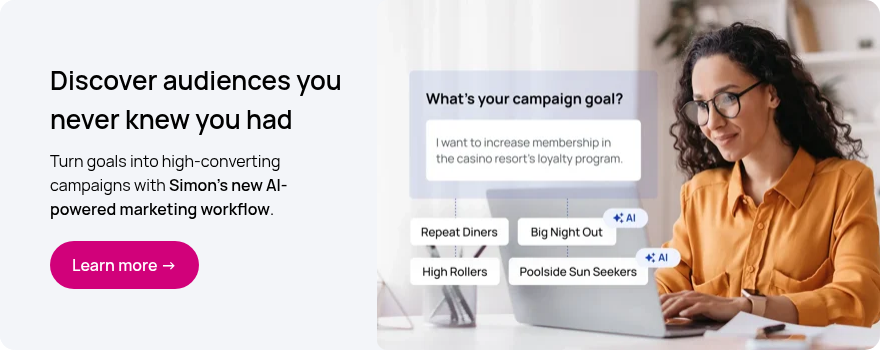
Why are a majority of marketers using genAI?
In short, genAI makes some processes easier. But as you may have discovered through experimentation, it can also make work harder. That’s why it’s essential to lean on other marketers to find effective use cases.
What do marketers see in genAI? It has some key benefits.
Marketing ideation done quickly
All marketing requires research. GenAI pulls from a dataset with thousands or millions of sources to help us brainstorm. Since genAI excels at synthesizing information from multiple sources, it’s a great place to ideate.
Have you heard of rubber duck debugging? A programmer explains their code line by line to a rubber duck. Just having the cute fella to talk to solves many problems with code.
ChatGPT has become a rubber duck debugger for marketers, but one that quacks back. It can give you an idea. You can throw out parts you don’t like or throw them out altogether, but it’s gotten the ball rolling by putting your thoughts into words — which can be extremely helpful when brainstorming new marketing ideas and campaigns.
Improved efficiency
54% of companies report that AI has improved efficiency and reduced cost issues. We’ll get to the cost element in a minute, but it’s not hard to imagine why genAI makes simple tasks more efficient.
GenAI can reduce busy work; it’s like a personal assistant that writes first drafts, marketing copy, campaign strategy ideas, and more. Marketers save 2.5 hours a day overall with AI tools. While it still needs human oversight, genAI makes work more efficient and less tedious for us.
Budget allocation
GenAI improves efficiency and reduces labor costs. Less time spent on your part cleaning up a spreadsheet or prepping content means less salary a company pays for that work.
This frees up your budget for other pressing concerns, allowing you to restrategize, knowing some simple tasks can be automated.
Where to use genAI in customer marketing
Where are savvy marketers making use of AI? They’re using it in places that automate time-consuming tasks without cutting corners. These are some of the ways genAI can help you with customer marketing.
Content creation
When we talk about genAI, content creation comes to mind first; 76% of marketers are using genAI to create content. For retail brands, this means generating personalized content across multiple channels. Here's how customer marketers are using it:
- Email campaigns segmented by purchase history ("Hey sneakerheads, check out our latest drop")
- SMS notifications customized by browsing behavior ("Those jeans you viewed are now 30% off!")
- Push notifications based on location ("Your nearest store has 3 items from your wishlist")
- Social media ad copy targeted by customer interests ("Athleisure lovers: Meet your new workout essential")
- Product descriptions that adapt to different customer segments
The key is using genAI as a starting point, then refining the output to match your brand voice and customer needs.
Customer chatbots and conversational AI
A bad chatbot does more harm than good, but 41% of customers prefer brands that use AI in their customer experience, and that number is growing.

By this point, many consumers are used to AI chatbots being available to usher in new customers or troubleshoot common problems. They can bypass these systems if they prefer to speak to a human. The worst issues arise when a chatbot can’t solve their problem, and there’s no human to speak with.
It’s worth seeing if a chatbot entices users to speak with someone from your team!
Expedited data analysis
53% of marketers use AI for data analysis, and retail brands are finding it particularly valuable for understanding customer behavior and campaign performance. For instance, you can ask genAI to:
- Analyze which product categories drive the highest customer lifetime value
- Identify patterns in customer churn across different segments
- Compare campaign performance across channels ("Show me which email campaigns drove the highest conversion rates last quarter")
- Spot seasonal trends in purchase behavior
- Track customer engagement metrics across different demographic groups
Many genAI tools can handle these tasks quickly. Simply upload your campaign data or customer metrics and ask specific questions like "Which customer segments showed a 20% increase in repeat purchases?" or "What time of day did our push notifications perform best?"
Customer research
GenAI makes customer research easier. You can ask it to help you create surveys or summarize their findings. SurveyMonkey is one of the many survey tools that’s built this feature into its product!

The same goes for persona research and help with customer journey maps. GenAI usually only provides the basics. Like the data analysis above, you can use genAI to look at CRM lists and customer spreadsheets to extract insights quickly. It can save you hours combing data and building pivot tables.
Content personalization
Give GenAI your personas and customer journeys to ask for its help with personalized messaging. AI can tailor emails, ad copy, and even text messages depending on who you’re speaking to.

Check out this conversation I had with ChatGPT on writing SMS messages for my hamster wheel company.
Using genAI for positive brand reputation
Start small
Like all data-backed marketing decisions, run some small tests to see if you can prove the value of genAI. Choose one tool and consider how to use it! From there, you can upgrade to paid tools that specialize in that aspect of generative AI.
Use secure tools
Have you heard of the chatbots that serve users private customer information? Be sure your technology is secure, and don’t give AI access to certain private or customer information unless you’re sure it is.
Keep overhead in the loop
Sometimes, you’ll need to walk eager supervisors through what genAI can and can’t do for customers and the team. The best way for them to learn is to show them, so communicate your genAI discoveries early and often.
Mandatory disclaimer: When genAI isn’t appropriate
It’s important to note a few things about genAI that remind us to tread carefully. First, genAI content isn’t copyrightable. Because of this, we shouldn’t use it to create key branding content like landing page copy, sales enablement assets, and other content we expect to own.
Another issue is that AI still suffers from hallucinations and biases. Hallucinations make content inaccurate — AI aims to please and will hallucinate facts to support points if you seek them.
The biases are based on the data from which it’s trained, meaning it can perpetuate these biases from what it’s learned. These can damage your brand, so you should fact-check everything and run AI work by multiple people to catch bias.
Another issue is creating consistency with genAI, ensuring the whole team understands how and when to use it. For this, an ounce of prevention is worth a pound of cure. You can avoid the problem by sharing AI work and building a content plan for where and when AI is appropriate.
Conclusion
The potential for generative AI is exciting, and it can mean a better customer experience when we marketers use it wisely. So, the next time you have a tough project to tackle, ask yourself: how can AI help? Spending time workshopping new ways to streamline tasks will save you time in the future. Let’s embrace a future with more AI to come!

Remember when CDPs seemed like the answer to all our customer data dreams? A single platform that would finally let us deliver those perfectly personalized experiences to every customer, every time.
But here we are in 2025, and most companies still struggle to create truly personal customer experiences despite significant investments in CDP technology. The hard truth?
A CDP alone isn't enough.
When CDPs were created, they offered a huge promise to the market and to marketers. If all your customer data is in one place, you can create more successful marketing campaigns and programs. Today, almost 12 years after the CDP category was first named, the need to drive successful campaigns and programs is more important than ever.
The data lays out a clear case. Companies that master 1:1 personalization drive 40% more revenue than their peers. And the stakes keep getting higher — 75% of American consumers now say they're more likely to be loyal to brands that understand them on a personal level.
So why have traditional CDPs fallen short?
Instead of focusing on better marketing, they’ve created fragmented data systems, complex implementations, and rising costs that rarely justify the investment. For most organizations, CDPs have become another data silo rather than the unified solution it was promised to be.
1. Customer data is still scattered
Sure, most CDPs claim to create unified customer profiles. However, for many companies, customer data is created and stored in various systems across marketing, sales, and customer service. Sometimes, in an attempt to centralize that data, it goes to a data warehouse. Yet, the reality is that so many systems still need to access customer data that adding a legacy CDP often just creates another data silo.
2. Customer marketing is more complex than anyone anticipated
What started as a marketing initiative to improve results quickly became an IT investment project requiring specialized skills and significant resources.
Many CDPs like Salesforce, Adobe, Segment, and Hightouch require you to be equipped with the right technical resources, martech stack, and integration capabilities to ensure you get the most out of your new tech. This doesn’t mean a platform that requires technical resources is necessarily bad; it just means there’s often a significant impact on your resources.
For example, the hidden costs can pile up, thanks to service fees from implementation, maintenance, training, and constant updates.
And that is just on the technical side. Most organizations still don’t have the internal resources to connect their marketing strategy to their data strategy, leaving many use cases the CDP was meant to support off the table and disconnected from the company's strategic vision.
3. Integration challenges
The average enterprise uses over 12 martech tools. Getting your tools to play nicely together requires help maintaining deep, bidirectional integrations with this ever-growing ecosystem, which can lead to data latency and synchronization issues. Understanding what data needs to go where and when is beyond most connectors' ability and requires expertise to untangle the martech web.
4. Higher costs that don’t justify ROI
Beyond platform fees, organizations face substantial costs in implementing their martech stack, such as:
- Implementation and integration services
- Ongoing maintenance and updates
- Training and headcount requirements
- Data storage and processing fees
- Strategic services
But there’s a revolution coming — a radically better way to deliver personalized customer experiences. And it starts with rethinking everything we know about customer data platforms.

The promise of modern customer marketing and the CDP
Now that we’ve painted the grim reality of traditional CDPs, let’s look at what’s truly possible when modern marketing is done right. When your business, customer data, and technology align, enterprise marketing transforms from scattered campaigns to revenue-driving, personalized customer experiences. Here’s what becomes possible.
1. Real-time personalization that drives growth
What if you could instantly recognize anonymous or high-value customers browsing your site, automatically tailor their customer journey based on their purchase history, and seamlessly coordinate messages across email, mobile, and ads? Modern CDPs make this possible by building Customer 360s and connecting customer signals to immediate action.
2. Predictive insights that unlock revenue
Rather than reacting to past behavior, you can anticipate customer needs — ranging from identifying customers who are likely to churn so you can intervene early or spot cross-sell opportunities before your customers know they need them.
3. Experiments that scale automatically
Your marketing workflows should empower marketers to experiment and optimize your brand’s messaging. With the right strategy, you can test different messages, offers, and journeys across segments to see what resonates best. Then, your martech stack helps you scale winning customer experiences across channels
4. Marketing that drives customer lifetime value
Track complete customer journeys, measure campaign impact across channels, and prove how personalization directly increases retention and lifetime value. In a world of shrinking marketing budgets and rising customer expectations, this alignment delivers what matters: measurable ROI and stronger customer relationships.
What it means for Simon Data to be “Anti-CDP”
This post isn't about dismissing CDPs — far from it. But we're taking a critical step back to look at the complete picture of what truly drives successful customer marketing.
Whether you’re evaluating your first CDP, looking to maximize your existing martech investments or have a CDP that isn’t quite working out the way you intended, we want to help you build the right foundation of strategy, people, and technology to deliver real results. While a CDP can be a powerful tool, it's just one part of a larger transformation that requires careful planning and organizational capabilities.
Let's talk about how to get it right.
The path forward to 1:1 customer marketing
Personalized customer marketing in 2025 and beyond requires a fundamental shift in approach. Rather than seeking a silver bullet solution, marketing teams must build their modern customer marketing program on three interconnected pillars: strategy, people and processes, and technology.

Here’s what we mean.
1. Strategy
You need a clear roadmap that aligns with your business goals, customer needs, and technology capabilities. Without this alignment, even the best technology will fail to deliver results. More importantly, you need a clear plan that connects your business strategies and campaigns with any data and technology needed to support them.
2. People & processes
The right mix of skills and operational models is critical. This means having:
- Marketing teams who understand data
- Data teams who understand marketing
- Clear processes for working together
- A balance of in-house and external expertise
3. Technology
Technology should enable innovation, not constrain it. This means:
- Flexible, scalable solutions
- Real-time data capabilities
- Easy integration with existing tools
- Clear ROI measurement
The strategy to achieve personalized customer marketing
The first step to success with a CDP is to build your customer marketing and data strategy. Often, organizations see a gap in their existing marketing strategy that isn’t delivering the desired business results.
Marketers feel the symptoms of a poor strategy: customers are harder to find or understand, existing customers are buying less — and you don’t often know why — and you can’t answer the questions your team is getting about how to fix it.
But what comes next is the biggest mistake brands make: shiny object syndrome. Often, companies start shopping for technology to solve this problem without understanding the right business goals and the customer data needed to support those goals.
When all you have is a hammer, everything looks like a nail. Instead, approach 2025 by:
- Defining your business goals and what it will take to hit those objectives
- Aligning your customer data plans to those objectives by examining what data is needed, what exists today, and most importantly, what is missing
- Using this information as a foundation to inform and update your campaign strategies, use cases, and to determine what customer experiences you need to invest in to drive the desired outcome
While many organizations have pieces of this work in place, align as a team before approaching vendors. If you're not aligned, consider finding a vendor (like Simon Data!) to help establish this foundation before implementation begins.
The core business objectives
Modern marketing boils down to three simple but essential strategy areas:
- Drive attention: reaching the right prospect at the right time with a message that resonates
- Convert attention into revenue: turning interest into action with personalized messaging across all channels
- Retain and grow customer lifetime value: building relationships with customers to increase purchase frequency, drive higher order values, and create brand advocates

In reality, it’s impossible to work on all three areas simultaneously. Most often, a brand knows which area to focus on based on its current business needs and goals, which goes a long way toward helping frame and focus its strategy.
The objectives define the data foundation
The data foundation you will build needs to map directly to your core business objectives.
You should track engagement metrics across channels, capture interaction history and channel preferences, and monitor content performance and response rates to drive attention.
To convert attention to revenue, unify customer profiles across touchpoints, track purchase intent signals, and connect marketing activities to conversions.
If you’re focused on growing CLTV, measure purchase frequency and order value, monitor loyalty program engagement, and track customer service interactions while continuously optimizing your marketing campaigns.
If you lack data in any of these areas or have blindspots that could prevent you from turning your customer data into revenue, many AI options are available to help you unlock insights.
Trust, accuracy, and compliance in customer data
Before we talk about understanding customer data, let’s talk about trusting it. Teams must work from a single source of truth (SSoT) — such as a Cloud Data Platform like Snowflake. For marketers, this means trusting data to drive decisions and fuel creative strategies. Here’s why it’s important to ensure you have compliant, safe, and accurate data.
Reason 1: Meet customer expectations
Customers now expect brands to understand their history and preferences. A CDP connects individual interactions into meaningful patterns, revealing the full customer journey in ways fragmented data systems cannot.
Reason 2: Revenue impact and personalization at scale
Without real-time data coordination, marketing teams risk targeting converted
customers with misaligned messages. Unified customer data enables accurate campaign measurement and efficient budget allocation while powering personalized interactions. Understanding customer context through data helps deliver relevant experiences that build lasting relationships.
Reason 3: Privacy & compliance
Siloed data increases compliance risk. Your CDP must stay current with GDPR, CCPA, and SOC-2 requirements, update customer preferences across all channels instantly, manage consent and privacy settings automatically, and enable innovation while maintaining compliance.
A composable CDP handles these requirements behind the scenes so marketers can focus on creating value from their customer data.
While establishing trust in your customer data and ensuring compliance are critical first steps, they're just the beginning of your personalization journey. You need the proper organizational foundation to transform this trusted data into meaningful customer experiences.
Let's dig into the essential resources, team structures, and processes that will help you deliver exceptional personalized marketing at scale.
The resources you need to deliver exceptional customer marketing
Delivering a personalized marketing experience at scale isn’t a one-and-done process — you need the right mix of people, processes, and measurement frameworks, plus the ability to experiment and evolve.
In our experience, three essential elements support exceptional customer marketing:
- Team structure and capabilities: The right mix of talent and expertise to execute 1:1 marketing
- How teams work together: The processes and workflows that enable streamlined execution
- Successful measurement: The metrics that demonstrate impact and guide learning and improvement
The right marketing team structure and capabilities
Creating memorable customer experiences starts with building a great team. Beyond technology, you need marketing leaders who understand customer journeys and data, campaign managers who can create personalized experiences, and analysts who optimize marketing performance.
The core team partnerships needed for CDP success

- Marketing: Drives strategy and execution of personalized campaigns
- Data/Analytics: Ensures data quality and builds predictive models
- Security/IT: Provides technical implementation, integration support, and compliance oversight
- Customer Support: Offers frontline insights about customer needs
- Customer Experience: Designs and optimizes end-to-end customer journeys while ensuring consistent brand interactions across all touchpoints
Not all teams have to look or operate the same, but you should be able to identify teams involved in the process and any resource gaps where you might need additional support. This can come from in-house experts, contractors, or by leveraging service experts like Simon when you have expertise and resource gaps.
How cross-functional teams should work together
Once your team is in place, you need efficient processes to execute customer marketing at scale. Strong operational models ensure your CDP investment translates into actual results.
While models will differ for each business based on where they operate, how they are structured, and even what vertical they are in, some common elements span businesses and serve as a starting point for your planning.
Operational requirements for CDP success:
- Clear data governance policies and ownership
- Agile campaign workflows for rapid testing and iteration
- Defined collaboration processes between marketing and technical teams with SLAs and SOPs in place
- Documentation of key processes and best practices
- Honesty without retribution about where current roadblocks or barriers exist so they can be improved
Cross-team collaboration
The most successful organizations break down silos between teams by establishing:
Daily operations: Regular syncs between marketing and data teams, shared project management tools, and clear roles for campaign execution help maintain momentum.
Communication channels: Create direct lines of communication between teams for strategic planning and urgent troubleshooting. Quick response times are critical for maintaining personalization at scale.
Review cycles: Schedule regular campaign performance reviews, data quality, and process efficiency. These check-ins help identify bottlenecks and opportunities for improvement.
Even the best CDP will only drive results when it has strong operational processes behind it. Focus on building workflows that empower teams to move quickly while maintaining quality. Your CDP should make these workflows and processes more manageable, often empowering teams to do more work in less time than previously, even when adding additional syncs and meetings.
Measuring marketing success at scale
You can’t manage what you don’t measure. Before investing in any technology, set clear metrics you plan to influence that support your business goals.
- Business impact
Track metrics that impact the bottom line: customer lifetime value, retention rates, and revenue per customer. These directly show the ROI of your personalization efforts.
- Marketing performance
Monitor campaign performance through customer acquisition costs, channel-specific ROI, cross-channel engagement rates, customer behavior, and conversion rates. You should also analyze segmentation effectiveness.
- Customer experience
Measure the quality of your personalization efforts with Net Promoter Score (NPS), customer satisfaction, channel preference adoption, engagement rates, and response rate metrics. These indicators ensure you’re delivering experiences that resonate with customers.
Your martech stack — and, specifically, your CDP — investment should make measuring, improving, and experimenting with these metrics easier.
Delivering a memorable customer experience requires three essential elements: skilled teams who understand both marketing and data, metrics that demonstrate impact, and smooth workflows that enable rapid execution.
Deliver the personalized marketing experience customers crave
While CDPs promised to revolutionize personalization, the reality is that successful customer marketing requires more than just another platform.
As we move through 2025, the winners will be brands that focus on the fundamentals: clear business objectives, strong data foundations, and cross-functional teams working together seamlessly.
They'll choose technology that enables their strategy rather than letting technology dictate it. Most importantly, they'll recognize that personalization at scale isn't just about having the right tools — it's about having the right approach.
Whether you're just starting your personalization journey or looking to optimize your existing stack, remember that the goal isn't to have the most advanced CDP. The goal is to create meaningful customer experiences that drive measurable business results. By focusing on the complete picture — from strategy to execution — you can finally deliver on the promise of true 1:1 customer marketing.
The future of customer marketing is here. Are you ready to embrace it?

A customer data platform (CDP) is one of the most impactful investments you can make to support your sales, marketing, and customer support teams. But it’s important to remember that not all CDPs are made equally. As with any other major software decision, it’s important to take the time to weigh your options and make the selection that is right for your business.
Not sure how to evaluate the CDPs you are considering? We recommend taking a capability- and feature-focused approach, looking for the CDP that offers the most impactful functions.
Below, we take a quick look at what a CDP is and how it compares against other martech options you might be considering. Then, we offer a list of must-have features and capabilities that we think you should prioritize as you evaluate CDPs.
What is a CDP?
A customer data platform (CDP) is a type of marketing software designed to centralize and unify customer data from multiple sources to make the data easier for businesses to use and understand.
By bringing all relevant customer data to one central location, CDPs make it possible to create a single, comprehensive view of each customer — which you can then use to facilitate more effective marketing, sales, and customer support strategies.
While not always required, CDPs usually sit on top of a cloud data warehouse (CDW) like Snowflake, which is typically responsible for centralizing, organizing, and cleaning the data to make it more usable.
CDP vs. other software options
Businesses often discuss customer data platforms alongside other software options, which often share similarities with CDPs, but it’s important to understand the differences that exist between them:
Customer relationship manager (CRM): CRMs are designed to act as a record of all the different ways a customer has interacted with your business. This includes keeping track of emails sent (and opened), calls, support tickets, and more, alongside contact information and specific other relevant details. They are used primarily for sales and sales enablement, and do not contain the full breadth of customer data typically found in a CDP.
Email service provider (ESP): An ESP is a solution businesses use to facilitate email activities. While functionality can vary significantly from ESP to ESP, these solutions typically make it possible to design and send emails, track performance, and manage email lists — functions that can often be achieved with a high-quality CDP.
Data management platform (DMP): DMPs offer short-term data storage for tasks like marketing segmentation. This includes storing, organizing, and managing customer data from multiple sources. They are not as effective as CDPs at facilitating long-term customer relationships.
CDP features and capabilities to look for
As you begin evaluating CDP options and narrowing down your short list, we recommend you look for a solution with the following capabilities:
1. Enterprise-level integration
Your CDP should connect smoothly with your existing tech stack, maintaining bi-directional data flows and supporting real-time API calls. It should adapt to your custom data models rather than forcing you to change your architecture. While there is no way to know your future data needs, you should be able to add and remove data sources easily and safely without a fixed data schema in the CDP.
2. Customer 360s
The real power of a CDP lies in its ability to compile information about your customers on an individual level. This deep understanding of each of your customers makes true 1:1 personalized marketing possible — but only if the CDP presents the data in a usable form.
That’s why we recommend looking for a CDP that can generate Customer 360s for you using customer data. These profiles offer a unified view of each customer, empowering more effective marketing and sales efforts at every customer journey stage.
3. Privacy and security
By its very nature, a CDP will contain a lot of information about your customers — potentially sensitive information like their contact information, date of birth, payment information, transaction history, and more.
It’s important to keep this data safe to facilitate customer trust and ensure compliance with various privacy regulations like GDPR and CCPA. With this in mind, look for a CDP that has layers of security — like encryption, access management, and monitoring — throughout its platform. Bonus points if it carries certifications like SOC 2.
4. Email marketing
While not every CDP offers email marketing functionality, many do. This makes it possible for you to replace your business’s email service provider while you deploy your CDP — eliminating redundancies in your martech stack, streamlining your operations, and saving funds to be used elsewhere in your budget. After all, why pay for a separate tool or service when you can handle email — and all customer communications — from a single centralized system?
5. No-code segmentation
How easy is it to create audiences and segments within your CDP? If it seems like it requires a master’s degree in data science just to spin up a segment, we’d argue that that isn’t the right choice for most businesses. Instead, look for a no- or low-code option that empowers your marketing and sales teams to create the audiences and segments they need, when they need them — without waiting on support from your tech team to make them happen.
6. Multichannel orchestration
If you’re like most businesses, you communicate with your customers in multiple channels — like social, email, SMS messaging, and the web. And while that’s great — it is, after all, the key to meeting your customers where they actually are — it can get complicated pretty quickly if you’re managing each journey in a separate tool. Look for a CDP capable of orchestrating campaigns and outreach across channels.
7. Predictive insights
Actually putting your customer data to use means you’ll need a way to parse and understand it — without combing through each individual profile. The good news? With AI and machine learning, it’s possible to quickly scale your efforts to make database-wide predictions about which customers are most likely to make an initial purchase, a follow-up purchase, or who might be about to drop off. It’s also possible to leverage these predictive insights to generate relevant product recommendations based on what you actually know about your customers. Look for a CDP that empowers you to make these robust AI-based predictions.
8. Service & support beyond technology
Look for a CDP partner who understands your marketing goals and provides implementation expertise and ongoing strategic guidance. They should demonstrate a clear ROI methodology and maintain robust data security practices. Moreover, they should be able to support you beyond the initial implementation. Services should support you throughout the contract lifecycle based on your needs and goals. If a vendor’s services are done after a speedy implementation, consider how you plan to manage the platform and new and ongoing initiatives.
Simon Data has it all
Having a hard time finding a CDP that has all of the features and functionalities we discussed above? The Simon CDP’s got it all. With the Simon CDP, you can:
- Generate comprehensive, accurate Customer 360s to power next-level marketing
- Trust that your customer's data is safe and secure thanks to Simon Data’s SOC 2 certification and adherence to GDPR and CCPA
- Design, implement, and track the performance of your email campaigns, including building email lists from your database
- Segment users via a no-code, easy-to-use interface that was designed with marketers in mind — not data scientists
- Orchestrate true multi-channel campaigns that empower you to meet your customers where they are
- Make predictive insights about your customers capable of powering your marketing messaging and sales efforts
We know that many brands have valuable customer data but lack the team capacity, specialized knowledge, or even the time to transform it into revenue-driving campaigns. Even with powerful tools like CDPs, technology alone isn't enough to deliver results.
If you’re looking for help strategizing your marketing campaigns, we offer lifecycle services that combine our AI platform with expert guidance from Simon. As a marketer, you probably know what campaigns you want to run, but we break down the barriers to getting them out the door.
We provide the extra resources, specialized knowledge, and hands-on support you need to drive measurable results faster.
Ready to learn more? Take a free virtual tour of Simon’s platform today.

Traditional cross-selling often falls flat. We've all seen those generic "customers also bought" recommendations. But some brands consistently get it right, turning customer data into helpful suggestions rather than pushy ones.
Here are three cross-sell strategies that work, with examples from brands leading the way.
1. The completion strategy: Build a personalized, holistic experience
Why this works: Customers often purchase items for a larger goal or project. By understanding these goals, brands can suggest products that help complete the solution, making the initial purchase more valuable.
How it works: Instead of pushing random related products, help customers complete a solution they're already building.
- Pull purchase history data for your top customers
- Identify common product combinations
- Map out typical purchase sequences
- Create messaging that focuses on completing the solution
Cross-sell success in action: Stitch Fix’s wardrobe building
The completion strategy works particularly well for personalized styling services like Stitch Fix. When clients keep a specific piece from their Fix – say, a pair of pants they love – it creates a natural opportunity to suggest complementary items that complete the look.
By combining their understanding of the client's style preferences with stylist expertise, they can recommend coordinating pieces like fitted tees, tailored pants, or accessories that build a versatile outfit around that anchor piece.
This approach makes sense because clients often seek to build cohesive wardrobes, not just acquire individual items. When someone invests in a statement piece, they're likely thinking about how to wear it. Timely suggestions for complementary pieces help solve that styling challenge while creating value for both the customer and the company.
Key takeaway: Focus on the customer’s end goal, not just the individual product. Success comes from helping them build or envision complete solutions.
2. The evolution strategy: Grow with your customer
Why this works: As customers become more experienced with your products or category, their needs naturally advance. By recognizing and responding to these progression signals, brands can suggest timely and relevant upgrades.
How it works: Help customers graduate to advanced products once they've mastered their current ones.
- Define clear progression patterns
- Watch for advancement signals
- Create messaging that acknowledges growth
- Time suggestions to match customer development
A top brand using this strategy: Nike
Consider how Nike approaches customer progression through their Nike Training Club app and product ecosystem. As runners log more miles or join their first virtual challenge, the brand can suggest performance-focused gear that matches their growing commitment.
Someone who starts with basic running shoes might be ready for specialized distance shoes, moisture-wicking layers, or recovery gear as their training intensifies. The suggestions are helpful because they're tied to the customer's progress.
Key takeaway: Growth-based recommendations work because they acknowledge and support the customer's journey, making them feel understood rather than sold to.
3. The ecosystem expansion: Creating connected experiences
Why this works: Once customers trust a brand to solve one need well, they're more likely to consider that same brand for related needs. Innovative brands capitalize on this by showing how their product families work together to create better overall experiences.
How it works: Get customers to invest deeper in your product ecosystem rather than jumping to competitors.
- Identify your product families
- Map integration benefits
- Track partial ecosystem adoption
- Create compelling "better together" stories
A top brand using this strategy: Philips Hue
Philips Hue demonstrates this perfectly through their smart lighting ecosystem. When customers start with a basic smart bulb starter kit, Philips can thoughtfully introduce complementary products that expand the experience — from light strips for entertainment areas to outdoor lighting for pathway safety.
These recommendations work because each new product adds functionality to the existing setup, helping customers discover new ways to enhance their home's lighting. Rather than pushing random smart home products, each suggestion extends the value of their existing Hue system.
Key takeaway: Success comes from demonstrating how products work better together than separately, making each addition a natural extension of the customer's initial investment.
How to choose the cross-sell strategy for your brand
While each strategy can work independently, many successful brands combine elements of all three. The key is choosing an approach that matches your products and customer journey:
- Sell items that are part of a larger solution? Start with the completion strategy
- Have products with clear usage patterns? Try the evolution strategy
- Offer multiple complementary product lines? Consider the ecosystem approach
Remember: Great cross-selling isn't about pushing more products — it's about suggesting the right ones at the right time.
When you focus on helping customers achieve their goals, whether building a perfect wardrobe, advancing their fitness journey, or creating a smart home, the sales will follow naturally.
Put the cross-sell strategy into action
While these cross-sell strategies seem straightforward, successful implementation requires careful planning. Here's how leading brands make them work:
The completion strategy in practice:
- Beauty brands suggest brush sets with premium makeup
- Home goods retailers recommend coordinating pillows with duvet sets
- Kitchen brands pairing cookware with complementary tools
The evolution strategy in practice:
- Skincare brands progressing from basic routines to targeted treatments
- Athletic wear moving from essential gear to performance pieces
- Hobby suppliers advancing from starter kits to specialized tools
The ecosystem strategy in practice:
- Beauty brands expanding from face care to complete routines
- Home brands connecting cleaning solutions across rooms
- Wellness brands linking nutrition, exercise, and recovery products
Measure cross-sell metrics that matter
Track these metrics to gauge your strategy's effectiveness:
For the completion strategy:
- Attachment rate on initial purchases
- Time to complementary purchase
- Complete solution adoption rate
For evolution strategy:
- Category progression rate
- Time between upgrades
- Customer satisfaction scores
For ecosystem strategy:
- Cross-category adoption
- Product family completion rate
- System usage metrics
Start small, test, and scale
- Choose one strategy that best fits your product line
- Start with your highest-performing category
- Test with a small customer segment
- Monitor both sales and satisfaction
- Adjust based on customer feedback
- Scale what works
The most successful cross-sell programs don't try to boil the ocean. They start with one clear strategy, perfect it with a specific customer segment, and then expand methodically.
Your customers show you what they need next through browsing, buying, and usage patterns. Your job is to recognize these signals and respond with suggestions that help them get more value from your brand — whether completing a solution, advancing their journey, or building their product ecosystem.
